
The short answer:
Yes — bolt cutters can cut some motorcycle security chains, but not all. Their effectiveness depends on:
- The thickness of the chain links
- The length of the bolt-croppers
- The quality and hardness of the steel
- Whether the chain is positioned correctly
- If the thief can get leverage against the ground or object
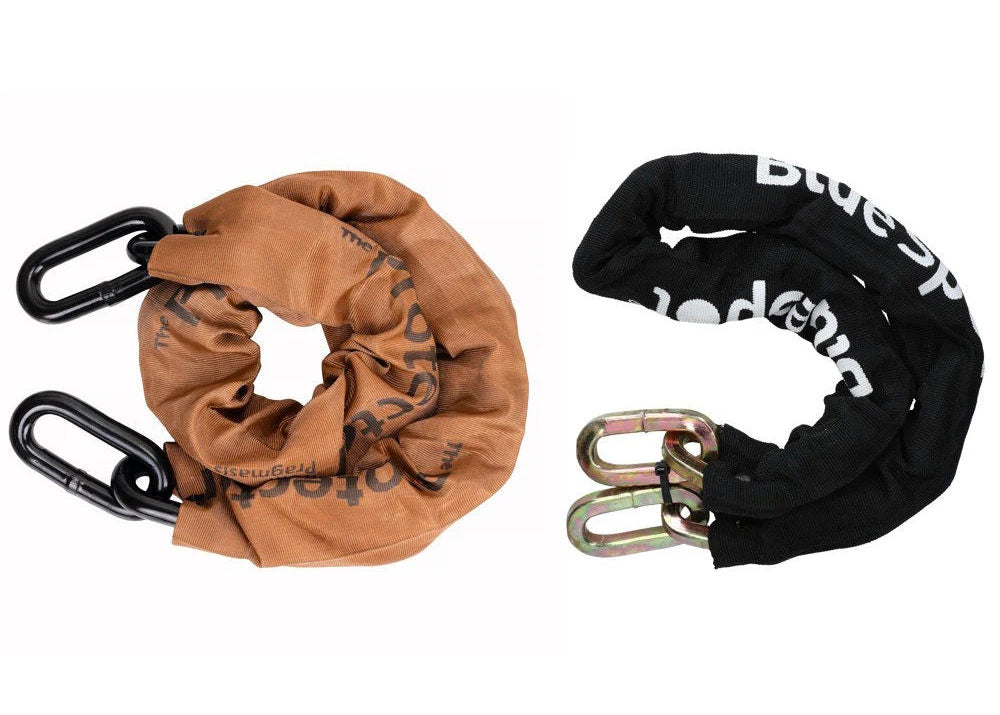
Here at Pragmasis, we produce security chains from 11mm to 22mm in thickness. Our 13mm and larger chains cannot be bolt-cropped by hand. Our 11mm can be bolt-cropped, but it requires a long set of bolt-cutters and a good technique. It'll see off most bolt-cropper attacks.
However, lesser chains can be bolt-cropped. In this guide, we explain the factors that affect bolt-cropper resistance and how you can position your chain to make it harder to attack, no matter what chain thickness or manufacturer you choose.
How common are angle grinder and bolt-cropper attacks?

Social media posts might show lots of angle grinder attacks, with lots of sparks flying, but that's not a true reflection of the tools that a majority of thieves carry when it comes to stealing motorcycles and bicycles.
The angle grinder attacks get attention, the social media algorithms pick up on this, and so these videos get shared more widely than the ones where a thief snaps a steering lock, smashes a poor quality disc lock off with a hammer or silently cuts a chain with bolt croppers.
In observed theft reports, many stolen bikes lacked robust security, reinforcing that any deterrent helps.
With so much focus on the 'best security chain' or 'anti-angle-grinder chains', it's easy to miss the main point, which is that you don't have to have the best. You just have to ensure you don't have such low-quality security that is easy for a thief to defeat with simple tools. The best security chain will deter a criminal from even trying.
For many real-world motorcycle or bicycle thefts, bolt cutters are the primary tool a thief will use. A chain that resists bolt croppers often forces them to abandon the attempt or switch to louder, riskier tools.
Believe me, a thief will be able to size up your chain from 6 feet away and know whether they're going to be able to defeat it.
Why thieves use bolt cutters
Bolt cutters are popular because they are:
- Quiet compared to angle grinders
- Relatively cheap to buy
- Easy to carry
- Fast if the chain is weak or badly positioned
- Effective against many budget chains sold as “hardened”
One of the most popular sets of bolt croppers is 42" long and costs around £300. They're pretty hefty and not something you could carry in a rucksack. However, even a 24" set of bolt croppers can defeat a security chain, and these can be bought for as little as £40.
A thief can defeat a 10mm security chain with a set of 30" bolt croppers quite easily - especially if the chain links are square rather than round, as the bolt-cropper's jaws will be able to get good purchase on an angular surface.
Takeaway: if a chain lets a thief get leverage, bolt cutters become a serious threat.
Chain thickness vs Cropping risk
Thickness alone isn’t the whole story — but it is a major factor. In practical terms:
| Chain Size | Realistic Bolt Cutter Outcome | Explanation |
|---|---|---|
| 6–10mm | Easily cut | Bicycle-grade / low-security chains. Quick to crop if leverage is available. |
| 11–12mm | Possible but depends on the technique | These can be defeated with good leverage and long croppers, but it takes serious effort and technique. |
| 13–14mm | Almost impossible in real-world conditions | Requires near-perfect leverage, space, and attack angle. Hand-cropping a Pragmasis chain is not possible, even with 42" bolt croppers. |
| 16mm+ | Not realistically cropped by hand in any conditions | Impossible to bolt-crop by hand. |
Steel quality matters more than the advertised size
Not all “16mm security chains” are created equal. The metallurgy is often the deciding factor.
Weak points in low-grade chains:
- Mild steel masquerading as hardened
- Square links that offer a grip point for cutters
- Poor heat treatment leaves them brittle or soft
- Inconsistent hardening across the link
Higher-security chains use:
- Proper heat treatment
- High-grade alloys
- Round links that prevent the jaws from finding a flat bite point
- Anti-cut coatings
The result: even the same diameter chain can behave very differently under attack.
Why chain positioning decides success or failure
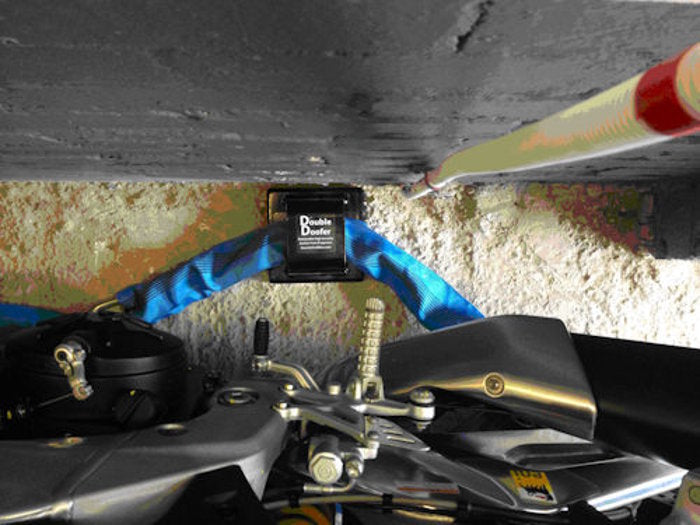
You can improve the chances of a weaker chain withstanding a mechanical attack if you ensure it's hard to access and kept off the floor. And even if you have a 16mm+ chain, you should take reasonable steps to ensure that it's hard to access, so that the thief is limited in the tools they can use and has to work on your chain in a way that delays them as much as possible, exposing them to more risk.
Bad Positioning (Easier to Cut)
- The chain lying on the floor
- Slack loops allow for leverage
- Wrapped only through the front wheel (the wheel can be removed)
- Positioned away from walls or anchor points
Good Positioning (Much Harder to Cut)
- The chain is kept off the ground
- Little to no slack available
- Rear wheel or frame locked, not just the front wheel
- Positioning removes the leverage needed for bolt cutters to “bite”.
Bolt Cutters vs Angle Grinders: what actually happens

A grinder is often seen as the “end game” tool — but it’s not always the first choice.
| Tool | Advantages for a thief | Drawbacks |
|---|---|---|
| Bolt Cutters | Quiet, fast, simple to use, easy to carry | Requires leverage and chain access; struggles with 13mm+ hardened links |
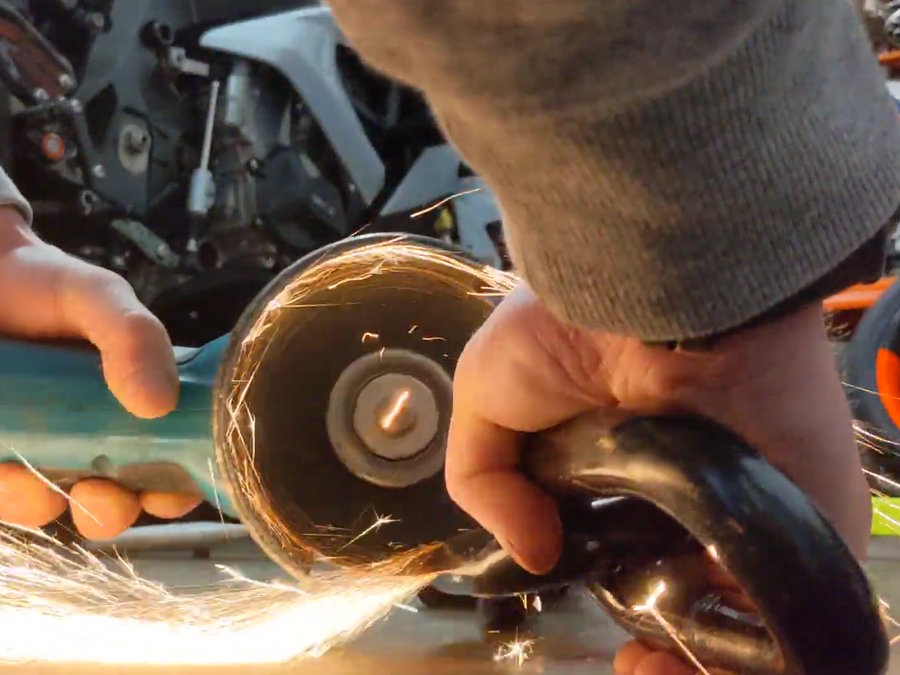
| Angle Grinder | Can defeat almost anything given time | Very loud, sparks, time-consuming, visible, increases the risk of being caught |
| Hacksaw | Cheap, minimal noise, easy to obtain | Practically useless against hardened steel; ineffective on 11mm+ motorcycle chains |
| Sledgehammer | Cheap, easy to obtain, fast | No good on quality 11mm+ hardened steel chains, but effective against some sub-10mm chains |
While plenty of social media videos show thieves in broad daylight using an angle grinder with sparks flying, most of the time thieves want to operate silently and quickly.
While angle grinders can defeat most chains given time, most opportunistic thieves on foot carry only basic tools like bolt cutters or hammers.
Any attack that takes longer than a minute exposes them to increased risk of being caught.
"The one thing a thief wants more than your motorcycle is to ensure they don't get caught..."
With a decent set of bolt-croppers, a thief can cut a cheap 10mm chain in 20 seconds, without making a sound or creating a commotion.
You can see why using a decent quality chain restricts the number of thieves who are prepared to try and defeat your security.
How to make bolt cropper attacks almost impossible
A practical checklist riders can apply immediately:
- Use a minimum 13mm hardened chain for general security
- Choose 16mm+ for home, garage, or overnight security
- Keep the chain tight to a ground anchor and the bike
- Do not leave the chain resting on the floor
- Lock through the frame, not just a wheel
- Pair with a ground or wall anchor to remove leverage
- Use a closed-shackle padlock to prevent access to the shackle
- Small improvements compound into a large security gain.
Portable Chains vs Home Chains

Weight matters if you’re carrying the chain with you. Our 19mm chain weighs 6.3kg per metre, making it impractical for those who want portable security but perfect for those looking for excellent static security.
Many riders use two tiers of chain:
Portable Chain: 11–13mm for commuting or errands
Home Chain: 16mm+ paired with an anchor or fixed point
This avoids the “one chain fits all” mistake that leads to compromises.

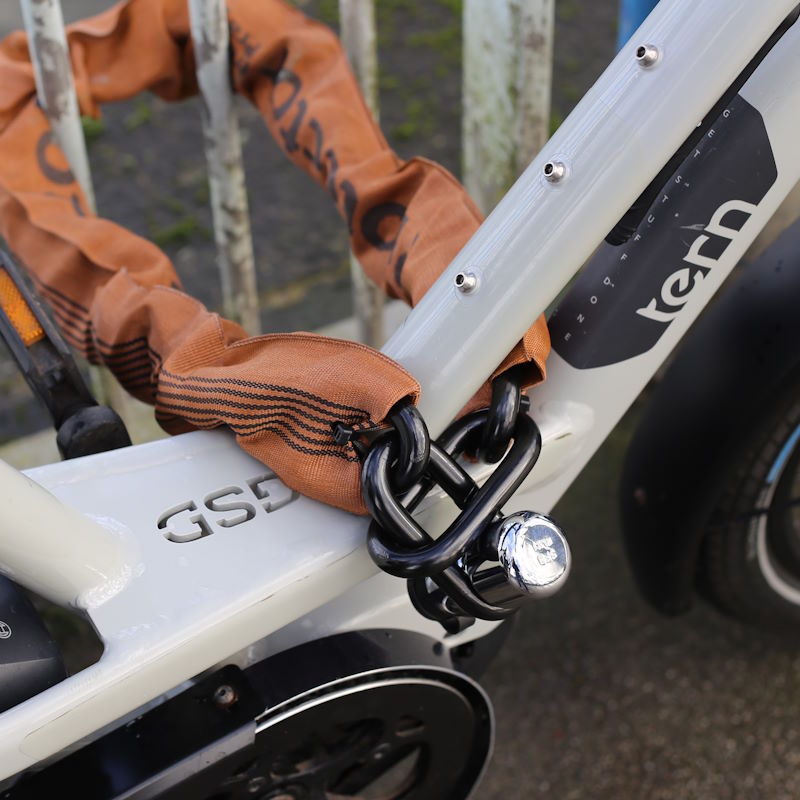
If you’re securing a motorcycle while out and about, a 13mm chain is the practical minimum we’d recommend. The picture above shows a 13mm chain with a Squire SS50CS padlock. It’s portable enough to carry, especially in the noose-end format, which reduces the length that you need compared to a standard chain while still giving good coverage when locking the bike to a solid anchor point. Our 13mm security chain can't be bolt-cropped by hand, meaning a thief would have to resort to a noisy angle grinder, attracting attention they'd rather not have.

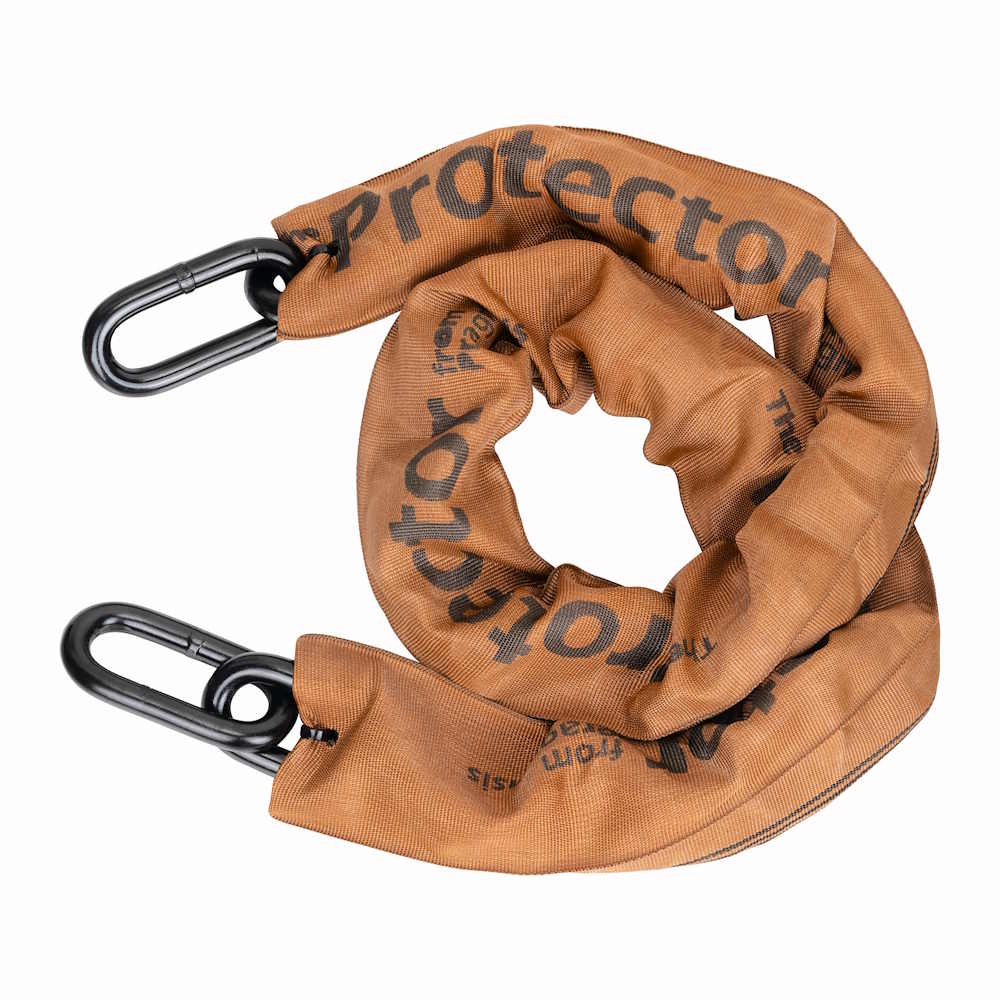
For home or overnight security, go as thick as is reasonable for your setup. A 16mm chain or 19mm chain is a serious barrier and will resist hand tools and slow down power tool attacks. The image above shows our Protector 16mm chain with a Squire SS65CS padlock. A 16mm or 19mm chain is heavier than a 13mm by a considerable amount, but that weight translates to security — ideal for garages, driveways, and sheds where portability isn’t a factor.
Our 22mm chain is designed for maximum resistance. It’s not something you’d carry, and it isn’t the quickest to handle, but for fixed-location security (driveways, high-risk areas, communal parking), it is popular and provides a level of deterrent and delay that most thieves simply won’t engage with.
In short:
11mm – decent security for lower value items
13mm – best portable option for day-to-day use
16mm–19mm – strong home security, realistically resistant to most attacks
22mm – maximum deterrent for high-risk environments and fixed setups
We've written an in-depth guide to motorcycle security with tips and tricks to help you improve your setup. This isn't just a list of products you can buy - we share real-world tips on the ways you can reduce the chances of becoming a victim of theft.
FAQs
Is any chain completely bolt-cutter proof?
Yes. Anything over 13mm is VERY difficult to defeat by hand, even with a 42" set of croppers. Most of the time our 13mm chain blunts the jaws of the bolt cropper, rendering it useless. A chain that's 16mm thick? Forget it.
Can bolt cutters cut a 16mm motorcycle chain?
Not realistically, if it’s properly hardened and positioned to remove leverage, it will be impossible to manually crop.
Can thieves cut 13mm chains?
Some can, if the chain is on the floor or made of poor-quality steel. Correct positioning and steel hardness make the difference. However, our Protector 13mm is uncroppable.
Are square-link chains weaker?
They provide a flat target for the cutter jaws, allowing them to get purchase. Once the jaws make a nick in a square-link chain, it is then even easier to defeat. Round links are usually a better defence against cropping attacks, and most of the time you'll damage the jaws of a bolt cropper if you're trying to crop a round-link hardened steel chain that's 13mm+ in diameter.
Do I need a ground anchor?
If the motorcycle is kept at home or in a garage, yes. A ground anchor keeps the motorcycle tethered to a fixed point and also removes leverage, meaning the thief is forced to have to operate in a fixed location (which might not be ideal or may prevent them from fully utilising their tools).
Conclusion
Bolt cutters are a common tool in motorcycle theft, so it makes sense to use a chain that can't be bolt-cropped.
That said, if you don't feel you can justify a more expensive chain, any chain, positioned correctly, dramatically reduces the effectiveness of tools like bolt-cutters. Thickness, steel quality, and setup are the key to choosing and using a security chain.
A thief with bolt cutters looks for:
- A chain with square links
- A chain that's under 13mm thick
- Known budget makes of chain
- A chain that's on the floor
- Slack to generate leverage
- Soft or low-grade steel
Remove those weaknesses, and you can be sure that a thief with bolt croppers will have a tough time.



Leave a comment
All comments are moderated before being published.
This site is protected by hCaptcha and the hCaptcha Privacy Policy and Terms of Service apply.