

A motorcycle disc lock is one of the simplest and most convenient ways to protect your bike from theft. Compact enough to carry on almost any motorcycle, a good disc lock prevents the wheel from rotating freely, making it much harder for thieves to break the steering lock and simply push the bike away.
But how secure are motorcycle disc locks, which designs offer the best protection, and are expensive angle-grinder-resistant models worth the extra money?
In this guide, we'll explain how disc locks work, what makes a good one, their limitations and how to choose the right lock for your motorcycle.
What is a motorcycle disc lock?

A disc lock is a metal lock that you fit through one of the holes in your brake disc, to prevent your bike from easily being pushed away.
A disc lock is small and therefore portable. They’re often very reasonably priced and they make a great visual deterrent as well as a solid physical barrier.
How does a motorcycle disc lock work?
You slide a disc lock onto the motorcycle’s front or rear brake disc and push the locking pin to the closed position. This means that the wheel can no longer be freely spun.
One of the most common methods thieves use to steal motorcycles is to snap the built-in steering lock and push the bike away. They often push the bike a few streets away and return later once they are confident no trackers have been triggered. If it is still there, they can be fairly sure it isn't fitted with a tracker.
A bike thief can snap a steering lock in under 10 seconds. However, a quality brake disc lock will require special tools, such as angle grinders, crow-bars, or hammers to remove. Most thieves don’t want (or need) to carry tools, therefore if you have a disc lock fitted you’ll be improving the chances of your bike remaining where you left it.
Do motorcycle disc locks prevent theft?
A quality disc lock is an excellent layer of security. Even the cheapest ones are a far better bet than just relying on your in-built steering lock alone.
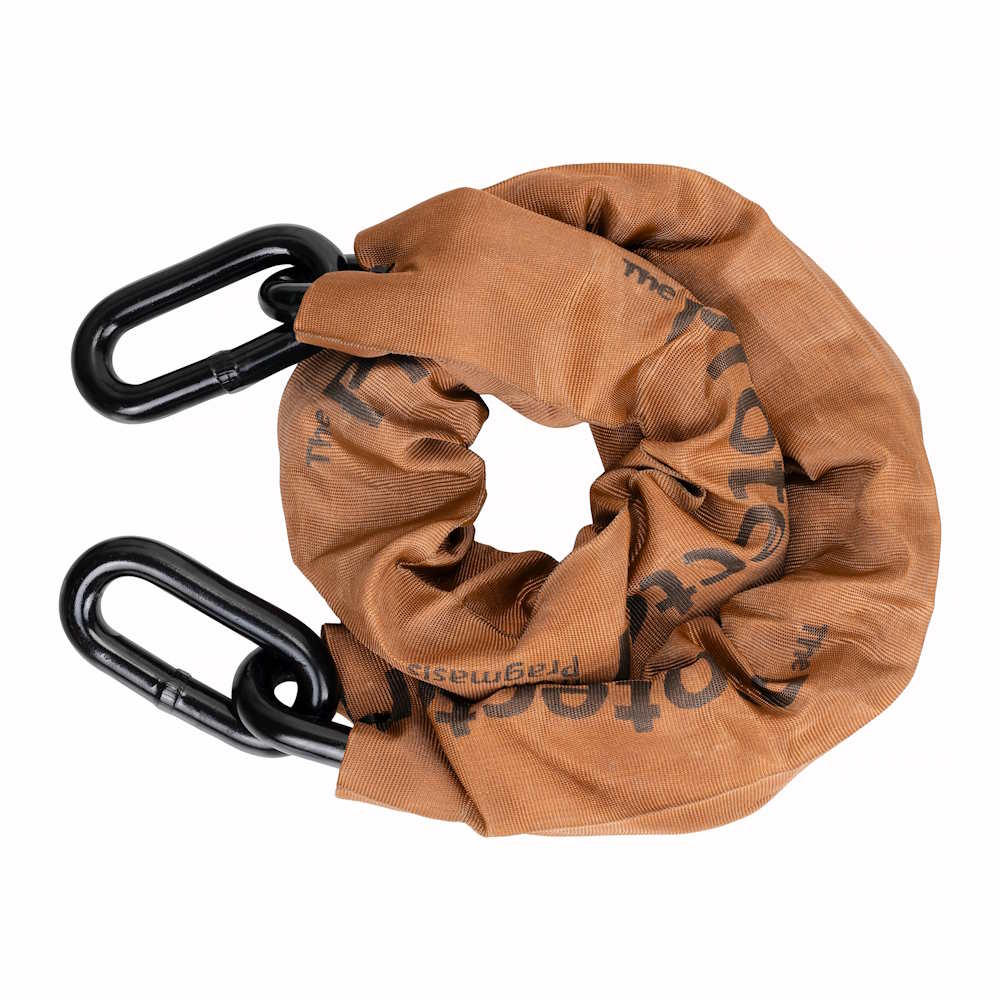
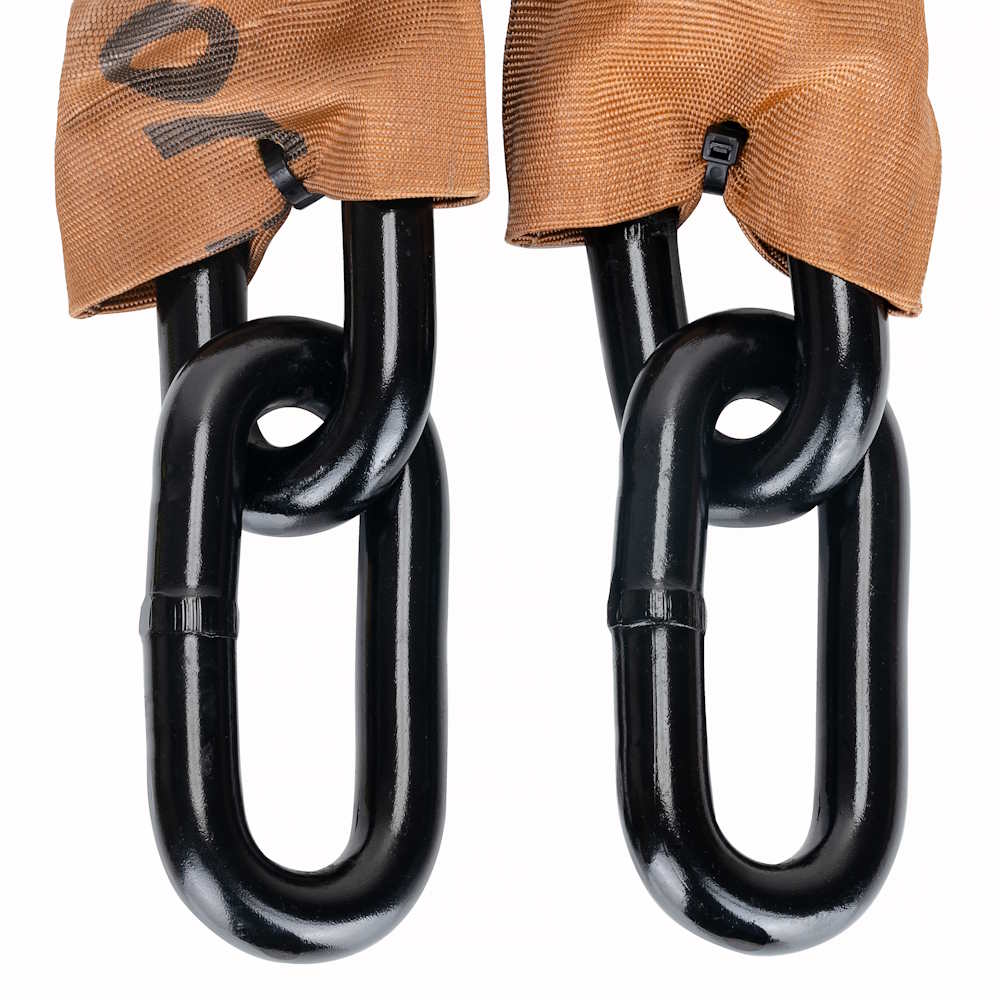
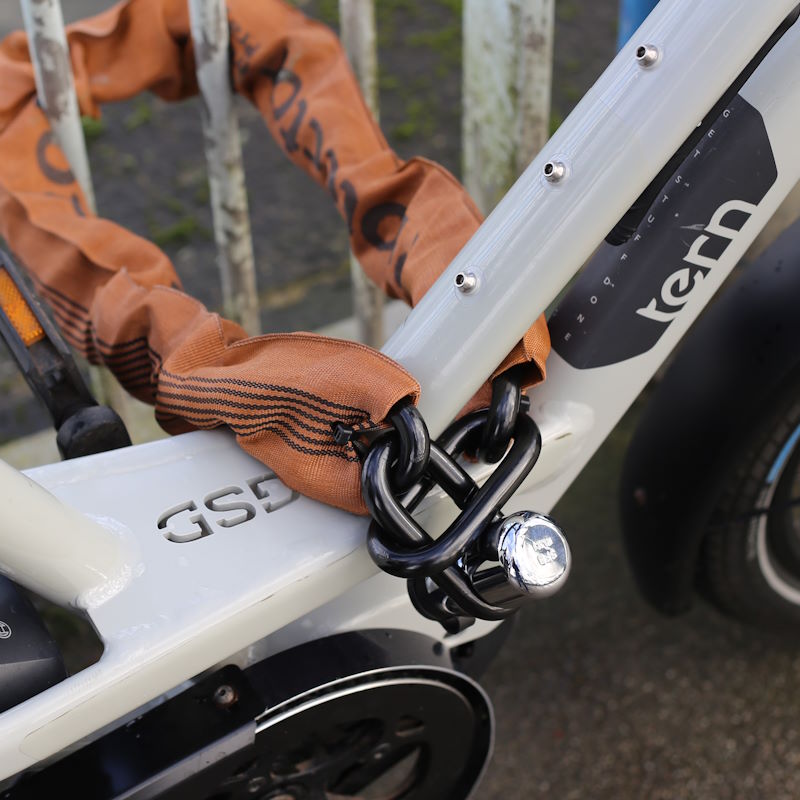
Disc locks are very effective at stopping one of the most common motorcycle theft methods: snapping the steering lock and pushing the bike away. With a disc lock fitted the wheel cannot rotate, which makes it impossible to roll the motorcycle normally. However, a disc lock should be seen as one layer of security rather than the only protection. For the best protection most riders combine a disc lock with a motorcycle security chain attached to a ground anchor or solid object.
What Makes a Good Motorcycle Disc Lock?
The best motorcycle disc lock isn't necessarily the most expensive. A good lock should combine substantial construction, resistance to physical attack and a design that's easy to use every day.
Look for:
-
Strong construction: A substantial locking mechanism and body that can withstand attempts to hammer, cut or force the lock.
-
Independent testing: Sold Secure or other recognised test results provide useful evidence of a lock's resistance to attack.
-
Good fit: The locking pin must fit through your brake disc, with enough clearance for the lock body.
-
Practical portability: A lock that is easy to carry is more likely to be used every time you park.
-
A reminder cable: A simple way to avoid accidentally moving your motorcycle with the disc lock fitted.
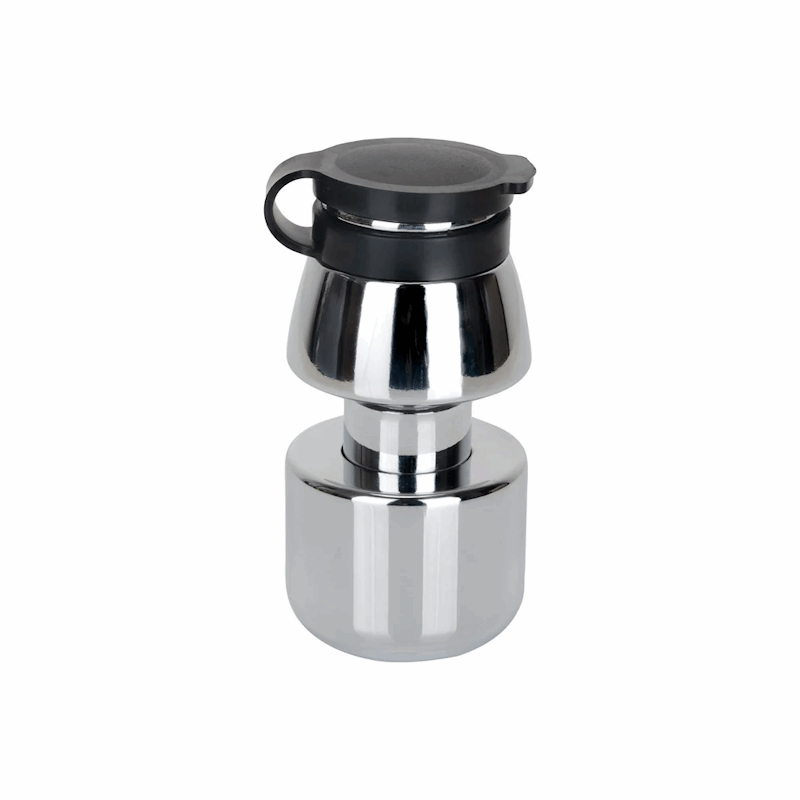
Our Pragmasis Roundlock is designed to work as both a motorcycle disc lock and a compact padlock for compatible security chains, making it a versatile option for riders who want one lock to serve two purposes.
Sold Secure disc locks
Most of the main manufacturers submit their disc locks for independent testing both in the UK and Europe, so it’s common to see a product with a Sold Secure or similar rating. These ratings are a good indicator that the lock is going to do a good job of withstanding an attack.
The two areas a disc lock won’t help with
Even the top-rated motorbike disc locks aren’t a guarantee that your bike won’t get stolen.
There are two main methods that thieves use to quickly bypass a disc lock. The first is simple: they just lift your bike into a van, drive away and deal with the disc lock in a location away from the public.
The second method is to use an angle grinder to cut the actual brake disc on either side of where the lock is situated. The brake disc is easier to cut and the thief removes this ‘pizza slice’ of brake disc with the lock still attached. They then push your bike away.
However it’s worth noting that most theft is done by opportunists who simply want to snap your bike’s steering lock and push it away. So while a disc lock isn’t perfect, it’s a brilliant way to deter and suppress a thief’s activity.
Can a disc lock be defeated?

Yes, even the toughest motorbike disc lock could eventually be bypassed if you had the right tools and enough time.
However, the point of a disc lock is that it eliminates thefts where the motorbike’s steering lock is snapped and the bike is pushed away.
The build quality affects how secure the lock is and how long or what tools are required to beat it. The quality then affects the price.
Put the advice into practice: Pragmasis Roundlock

Looking for a quality disc lock? The Pragmasis Roundlock featured in this guide is a compact option with a 21mm locking pin. Check the product details and your brake disc dimensions before buying to make sure it fits your bike.
A disc lock helps prevent push-away theft, but it cannot stop a bike being lifted into a van or a thief cutting the brake disc. Use it as one layer of protection alongside a security chain tethered to a solid object, ideally a ground anchor.
Disc Lock vs Security Chain
A motorcycle disc lock and a security chain do slightly different jobs. A disc lock immobilises the wheel so the bike can’t be rolled away, while a chain is designed to tether the bike to something solid (like a ground anchor or fixed street furniture) so it can’t simply be lifted into a van.
For best protection, many riders use both as part of a layered setup.
Here's a quick comparison of a disc lock versus a motorcycle security chain
| Feature | Disc lock | Security chain |
|---|---|---|
| Portability | Excellent (small and easy to carry) | Moderate to poor (heavier, depends on thickness/length) |
| Stops “push-away” theft | Yes (wheel can’t rotate normally) | Yes (especially if the bike is tethered) |
| Stops van/lift theft | No (bike can still be lifted) | Yes, if locked to a solid object |
| Best for | Quick stops and everyday convenience | Longer parking, higher-risk areas and overnight security |
| Best practice | Try and use it on the rear wheel and add a reminder cable | Keep the chain tight and off the ground where possible |
If you’re leaving a motorcycle for more than a short stop, a good rule of thumb is: disc lock for immobilisation + chain for tethering (ideally to a ground anchor). This combination reduces the number of easy theft options available to opportunistic thieves.
Motorcycle Disc Locks: Hints and Tips
- Try and lock your disc lock to the disc's centre, somewhere between the fork leg and the brake calliper, to prevent the lock from being removed and the disc from being readily cut. If you make access hard for thieves, they are less likely to be able to steal it.
- It's likely that you'll require a disc lock with a pin diameter of 6mm or less if you ride a scooter as anything larger won't fit through a scooter's brake disc.
- You can't ride away with a disc lock on but if you forget it's fitted, you might try! To avoid any incidents, buy a disc lock reminder cable.
- Your disc lock should be supported by a motorbike cover. One of the best ways to prevent your bike from being stolen is to keep it hidden.
What do you need to spend on a disc lock?

Is there any point in buying a cheap disc lock?
Well yes and no.
The disc lock on the left costs £12 and the one on the right costs £60.
The image is slightly misleading because both disc locks look to be a similar size but have a look again and you’ll see the cheap lock is very small indeed. The yellow lock has a 4mm pin but the lock on the right is a Roundlock and it has a 21mm pin.
Even the £60 one isn’t the most expensive. There are motorbike disc locks out there that retail at over £200.
If I was buying and using one disc lock, I definitely wouldn’t use the £12 one but I wouldn't buy the most expensive one either. Why? Because if you have a REALLY good disc lock, the thief will probably avoid it and just cut the brake disc off instead. Don't believe me? See the section below.
While the cheap lock will stop anyone without any tools, it’s not that strong. With one good hammer blow, it is likely to shatter. However, if you locate it in a smart position, for example on your rear brake disc, tucked away, it can provide an added layer of security to the brake disc lock you’re using on your front wheel, because it’ll be hard to access and thus hard to strike or cut.
Generally speaking, the more money you spend, the better your lock will be. A good quick tip is to look for a Sold Secure rating and buy the best you can.
I’d look to spend a minimum of £50 if I was using a brake disc lock and leaving my bike for an extended period of time.
Just remember that cheap locks are usually a false economy. Think about the grief, expense – and time – involved in claiming from your insurance for a stolen bike. Now, do you really think a £20 disc lock is going to be good enough as a main security layer?
Is an Anti-Angle-Grinder Disc Lock Worth It?
Angle-grinder-resistant disc locks can offer excellent protection against attacks on the lock itself. However, there's an important limitation: a thief may choose to attack the motorcycle's brake disc instead.
I've seen cases in London where thieves have cut a section out of the brake disc, removing the lock along with it.
That's why I wouldn't necessarily spend £200 or more on a single disc lock. Personally, I'd rather spread that budget across several good security products, such as a quality disc lock, a security chain and a motorcycle cover.
The more different obstacles a thief has to overcome, the harder you make their job.
Did you know that a motorcycle secured with heavy-duty security can actually be less likely to be stolen than the average car?
According to research by Bennetts BikeSocial, motorcycles secured with the heaviest-duty chains experienced fewer than one theft per 1,000 bikes, compared with 1.1 per 1,000 cars.
It's compelling evidence that investing in good motorcycle security really does make a difference.
Read the Bennetts BikeSocial research.
What to look for in a quality disc lock
Disc locks, regardless of the material from which they are fashioned, are an excellent visual barrier that instantly thwarts even the most amateur bike thieves.
They should be able to withstand various methods of attack, from hammer blows, to angle grinders.
Here is a list of factors to think about when purchasing a disc lock.
BUILD QUALITY: Due to the use of materials that can withstand chemical attacks (freezing), hammer blows, bolt croppers, and angle grinders, premium locks are pricey. No lock is completely impenetrable, but a high-quality model, such as the Roundlock, is designed to withstand serious attacks. Combined with the security practices mentioned above, a strong disc lock can significantly increase the effort required to steal your motorcycle.
INDEPENDENTLY TESTED: Sold Secure or ART ratings show which level the lock has passed. Even while some high-quality manufacturers choose not to submit their goods for testing, these ratings are still a good indication that a lock will do the job.
ADDED NOISE: Not all alarmed disc locks are high quality. The more time an alarm spends on a bike, the better it is in deterring thieves from trying to pick the lock, but the less expensive alarm disc locks can be destroyed with a few hammer blows before anyone notices.
REMINDER CABLE: There are two kinds of bikers: those who have attempted to leave while still tied to their disc lock and those who won't. Although it can be purchased individually, a disc lock reminder cable, as seen above, is a useful addition.
PORTABILITY: Some disc locks come with a pouch or a mounting bracket. This handy extra makes it easier to carry, and if you take it in your luggage it keeps a possibly dirty lock away from your other equipment. Some locks will put beneath your seat, while others you may connect to your pillion seat strap.
Are alarmed disc locks any good?
Some disc locks have built-in alarms but should you buy one?
In my opinion, don’t get carried away with the fact it has an alarm. A rubbish disc lock with an alarm is not worth the money; a thief will know they can smash the lock off with a few good hammer blows and then smash it again to brake open the battery housing and disable it.
An alarmed disc lock is a good idea but you have to use a disc lock that will withstand an attack. For my money, this Oxford Boss (pictured above) is one of the best alarmed disc locks. It is Sold Secure gold rated, so very safe. It also has an alarm that is 100 dB loud and is activated by movement sensors. You can switch the shackle around by 180-degrees and lock it up without setting the alarm which is handy. You can also use it to secure your bike with a motorcycle chain.
If you park your bike on the street outside your house, an alarmed lock is a good early warning sign that someone could be up to no good.
The RRP is around £90 but you can always find it cheaper. Other good brands to look out for are Kovix and Abus. Both of those guys make good quality alarmed disc locks.
Will a disc lock fit my scooter?

Scooters often have smaller brake discs and the holes in these discs are smaller too. So not all motorcycle disc locks will fit your scooter, especially if the locking pin is thicker than 6mm.
Fortunately, there are several disc locks made specifically for scooters, and most of them have pins with sizes of 6 mm or less, thus they will fit a scooter.
This pin is smaller than the typical motorcycle disc lock, however, the majority of scooter-specific disc locks are made with the pin recessed and shielded from attack by a thicker lock body.
Since scooters make excellent city transportation, owners frequently park them on the street rather than in a garage. They also tend to keep them overnight in one area but move them to a new location during the day.
A disc lock is a handy thing to carry but seeing as most scooters have generous under-seat storage, you can easily carry a quality motorcycle security chain and use that alongside a disc lock for added security.
Motorcycle Disc Lock FAQs
What is the best motorcycle disc lock?
The best motorcycle disc lock is one that combines strong construction, good resistance to attack and everyday convenience. Look for independently tested locks with a Sold Secure or equivalent rating, and make sure the lock fits your motorcycle's brake disc. Our Pragmasis Roundlock is a compact, heavy-duty option that can also be used as a padlock with compatible security chains.
Can a motorcycle disc lock be cut with an angle grinder?
Yes. Given sufficient time and the right tools, almost any disc lock can be defeated. Some locks offer considerably better resistance to angle grinders than others, but thieves may also attempt to cut the motorcycle's brake disc rather than the lock itself. For this reason, we recommend combining a good disc lock with a security chain attached to a solid object.
Should I put my disc lock on the front or rear wheel?
Both positions can be effective, but we generally favour fitting a disc lock to the rear wheel where possible. Rear brake discs can be harder for thieves to access, particularly when the lock is positioned close to the brake calliper or other components. However, fit and accessibility vary between motorcycles, so choose a position that makes the lock difficult to attack while allowing you to fit and remove it safely.
Are alarmed motorcycle disc locks worth buying?
An alarmed disc lock can provide an additional deterrent by sounding when the motorcycle is moved or tampered with. This can be particularly useful if you park within earshot of your bike. However, an alarm is no substitute for strong construction. A well-made disc lock without an alarm may offer better physical security than a cheap alarmed model that's easily broken.
Will any motorcycle disc lock fit my bike?
No. Brake disc hole sizes, disc thickness and clearance around the brake calliper vary between motorcycles. Some locks use small locking pins that fit most brake discs, while heavier-duty models require more space. Scooters often have particularly small brake disc holes. Always check the lock's dimensions against your motorcycle before purchasing.
Is a disc lock enough to stop motorcycle theft?
A good disc lock is an effective defence against thieves who break the steering lock and attempt to push the motorcycle away. However, it cannot prevent several people from lifting the bike into a van. For better protection, combine a disc lock with a motorcycle security chain attached to a fixed object or ground anchor, and consider using a motorcycle cover.




Leave a comment
All comments are moderated before being published.
This site is protected by hCaptcha and the hCaptcha Privacy Policy and Terms of Service apply.