

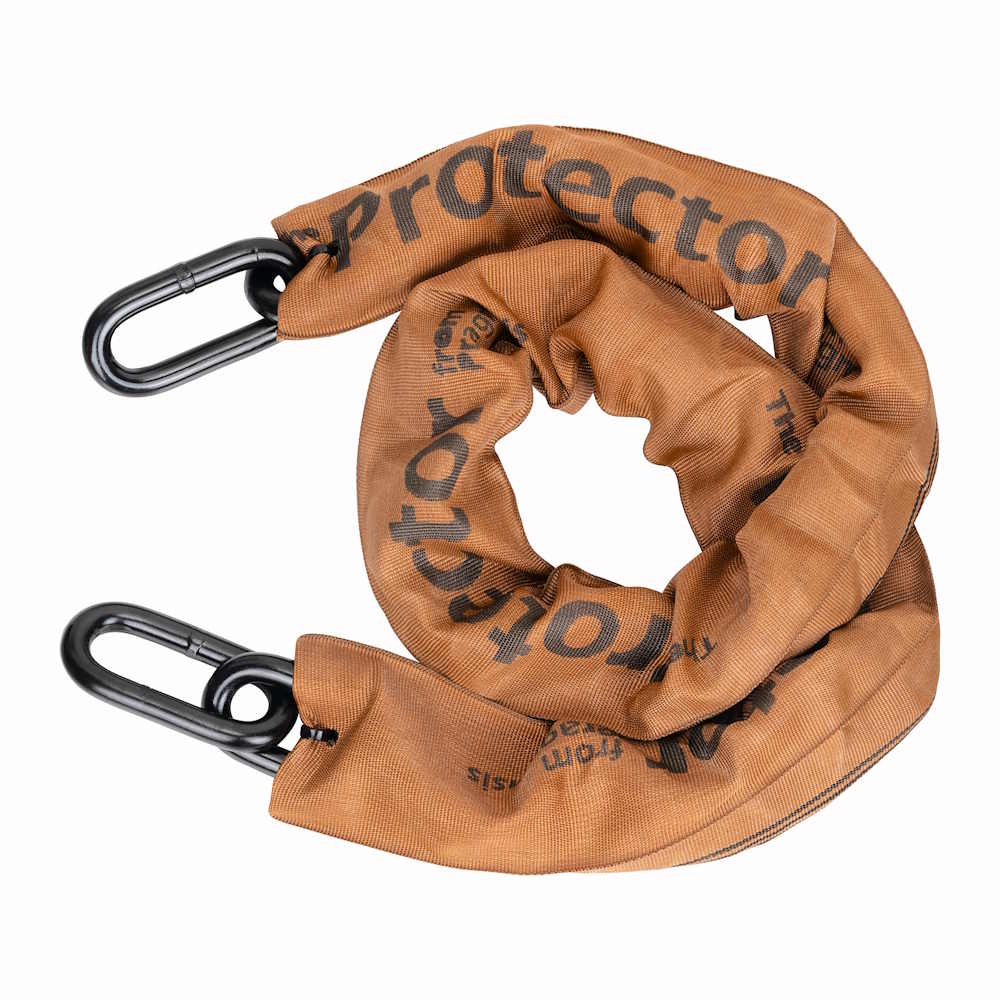
A bicycle chain lock is one of the most flexible ways to secure a bike. Unlike many rigid locks, a chain can be threaded around awkward objects, multiple bike parts, or even several bikes at once. However, the difference between a cheap and quality chain can be enormous — link thickness and materials all affect how well a chain can resist attack.
But with so many different link diameters, lengths, materials and types of lock available, it’s difficult to know what represents good value and what simply won’t stand up to attack.
Not all chains are created equal.
A quality security chain will deter opportunist thieves — the type who would rather cut through a cable lock in seconds and move on. A poor-quality chain, however, can be defeated just as quickly as a cable lock when attacked with portable bolt croppers.
In this guide, we’ll cover:
- How much you realistically need to spend
- The chain thickness that actually matters
- Why length is critical
- Why the padlock is just as important as the chain
- How to use your chain correctly to maximise protection
What is a bicycle chain lock?
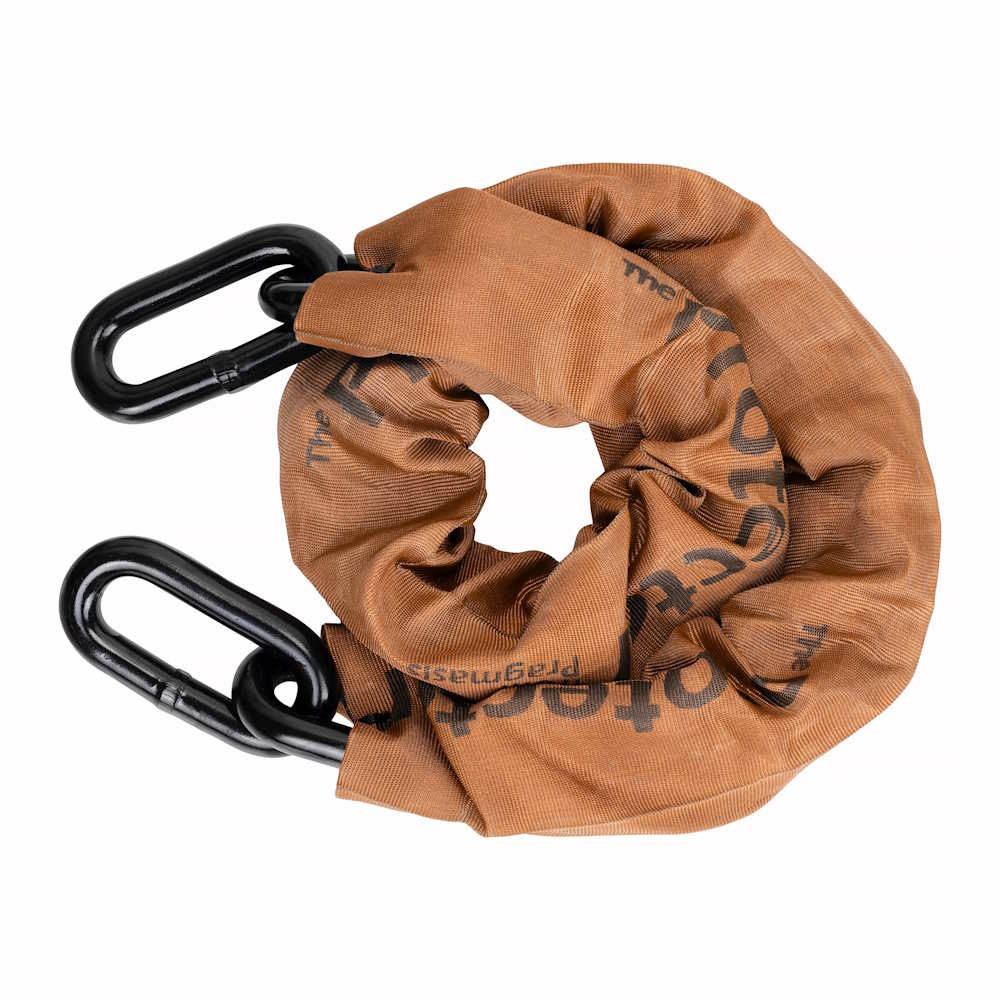
A bicycle chain lock is a security chain designed to secure a bike to a fixed object such as a bike rack, railing or lamp post. Unlike rigid D-locks, chains offer flexibility and can wrap around larger objects while still providing strong resistance to cutting tools.
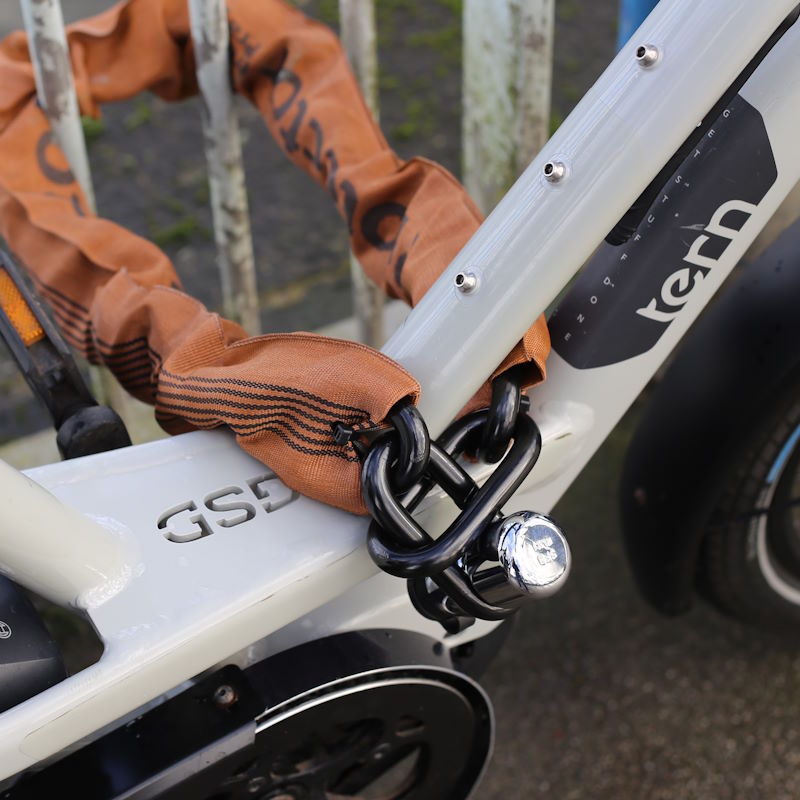
Even a strong chain won't protect your bike that well if it isn't used correctly. See our guide on the best way to lock your bicycle for best practice locking techniques.
What should you spend on a bicycle security chain?
This question is difficult, if not impossible, to answer. Your security chain’s cost changes according to:
- Its length
- The link diameter
- The quality of metal used
- Whether the links are round or square
- Whether the metal has been hardened
- Whether it comes supplied with a padlock
I know for a fact that I would never purchase a chain that cost less than £50.
Why I'd avoid a sub-£50 chain
Okay, so you might not want to spend fifty pounds on a chain, but consider these points
- What will you have to pay on your excess if you claim on your insurance?
- How would you get from A to B if your bicycle was stolen and what would that cost?
- What about the higher insurance costs if you do claim?
- What about the time you spent filing insurance claims, reporting the crime, and talking to an insurance company representative on the phone?
According to some guides, you should spend between 10% and 15% of the value of your bike on security. I get where these guides are coming from, but I don’t believe this is really helpful.
What I advise is that, if you can afford it, you should spend a minimum of £100 on physical security. More if you can afford it.
You could buy a decent chain lock and D-lock for that money. Although it may seem like a lot, the money will be well used. If you are on a tight budget, go for a shorter but thicker chain.
Ultimately what you spend is down to you, but I want you to think twice about buying that sub £30 chain or D-lock as the only person you're fooling is yourself.
A little extra spend makes ALL the difference.
Chain Buying: Key Factors to Consider
Chain Thickness
The thickness of your chain determines whether or not specialist tools are required. The thicker the chain, the larger, noisier and less subtle the tools are that are required to use it.
For example a 6mm chain can easily be snipped by bolt-cutters that can be carried in a small rucksack. Anything over 11mm is going to require larger croppers, probably 36 inches and significantly more time.
A well-locked bicycle with an 11mm chain will be VERY hard for a thief to bolt-crop. Anything over 13mm will pretty much rule out the cropping method and require an angle grinder. This eliminates the opportunist bike thieves.
8mm and thinner
This diameter chain, in my opinion, is not worth it. Many of the budget brands that are offered on eBay or at stores like Halfords or Screwfix are 8mm thick. Your local bicycle shop may well be full of them.
You could say that since you can’t get past them without serious tools, and that some get a Sold Secure Bronze rating then they are OK to use.
However, an 8mm chain may be cut with even a set of 12′′ bolt cutters (most of these bike-stealing parasites carry 24" croppers at a minimum).
Due to consumer pressure, cheaper chains are produced and, obviously, purchased by customers who are on a budget or who believe it to be good enough.
Yes, some 8mm chains are rated Sold Secure Silver but I’d rather use a thicker D-lock than an 8mm chain.
10mm
Due to its more appealing price point, 10mm is a common thickness.
A 10mm chain is a fantastic choice if you need portability. Some people carry them around their waist but you can carry one in your rucksack, no problem.
It’s important to note that security chains with a 10mm thickness vary in quality. Some will use case-hardened and chemically treated metals where as others will be made of lightweight metal that should never be sold with security in mind.
Some 10mm chains will scrape in with a Sold Secure rating but the same chains also score a 2 out of 5 in the ART tests, so you can definitely do better.
However, there are numerous companies and non-branded eBay sellers who sell 10mm chains that I would barely trust to lift a bucket of water from a well, let alone protect my bike.
One word of caution: if you’re going to use a 10mm chain, make sure it’s from a reputable manufacturer like Abus, Squire or Kryptonite so you can be sure it’s manufactured of high-quality materials by businesses that care about their reputation.
11mm-13mm
Chains begin to get serious at this level but they also get heavy and pricier but I think the extra spend is worth it.
For me, the greatest benefit of choosing 11mm or thicker is that you can immediately weed out the majority of the manufacturers of junk chains.
Although Gold-rated Sold Secure bicycle chains start at 10mm, it’s worth noting that the smallest Sold Secure Gold motorbike chain is 11mm thick. I really don’t think thieves that steal bicycles or motorbikes carry different tools, so I'd look at 11mm as a minimum thickness.
The more reputable brands begin at about 11mm and run all the way up to a huge 22mm (more on that, below).
If I was securing my bike at the same spot regularly, the thinnest chain I’d use is an 13mm chain. Yes, they are weighty but not obscene. You can get them with a noose ring on one end, meaning you can carry a shorter length chain. Pair it with a high quality D-lock and you've got a great combination.
It's almost impossible to bolt-crop a 13mm chain and this is where I'd start if I was securing a bicycle or motorcycle outside for any length of time.
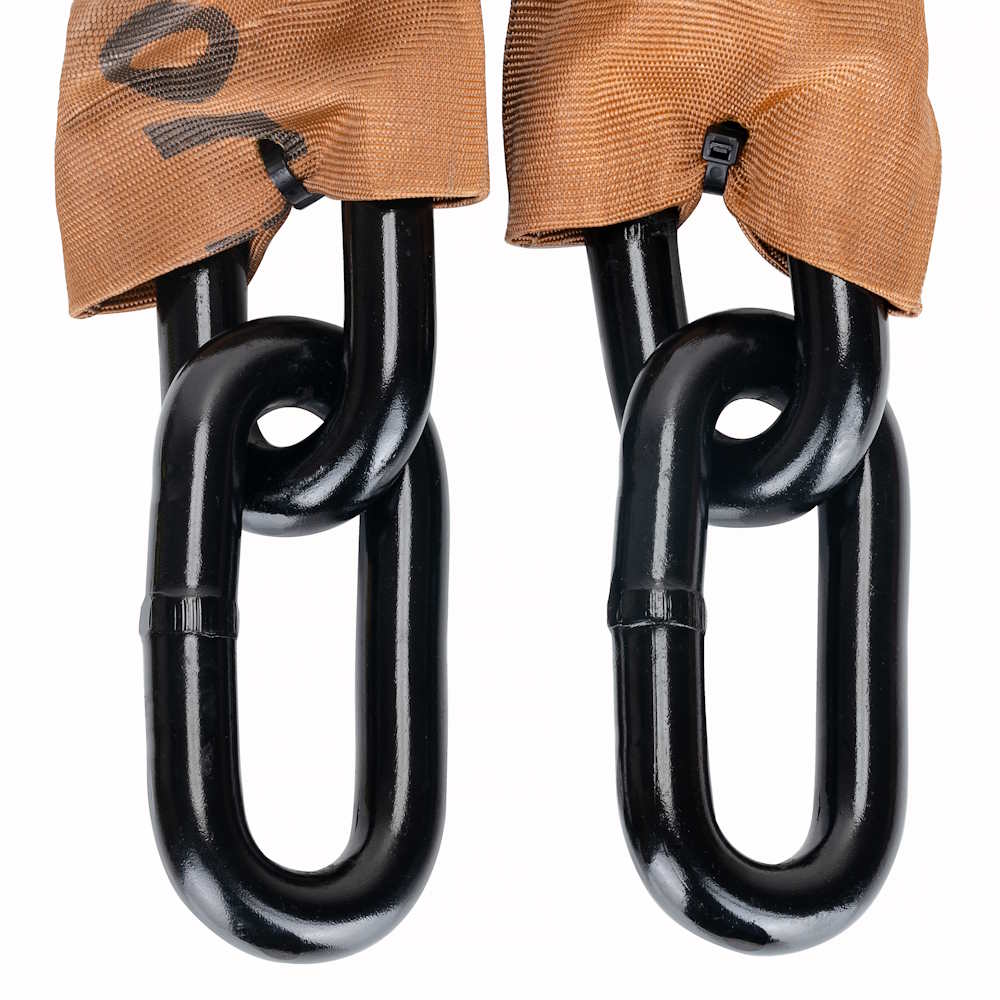
The links on chains of this thickness can differ depending on whether they are square or rounded. Round links are far more difficult for angle grinders and bolt croppers to grasp.
You should choose rounded links over square links.
16mm
There are chains between 13 and 16mm thick but anything above 16mm isn’t bolt-croppable, so if you’re going for a chain to eliminate this common tool, 16mm is where it’s at.
These are not portable, well, not unless you’ve eaten your spinach. You can get 16mm chains in shorter lengths but they're still hefty things to carry, especially on a bicycle.
A 16mm chain is excellent for home security because it can’t be cut with a bolt cutter by hand and takes some time to defeat with an angle grinder.
16mm chains are generally only produced by companies who care about security and their reputation and not just their profits.
A 16mm chain and a waterproof bicycle cover are effective deterrents for bike thieves if you park your bike outside, say in a communal bike shelter. Most thieves won’t even try and take on a 16mm chain, unless the bike's worth a serious amount of dosh. They’ll just pinch the bike in the rack with the least security.
If you’re parking your bike at home, for example down the side of your house or in a car port, you should consider a ground anchor or wall anchor, which means your bike is tethered to a solid object and can’t simply be carried away. They’re not expensive and are simple to install. See our guide on how to store your bicycle securely at home.
19mm – 22mm
A 19mm chain and larger is carrying on with the same ethos as the 16mm versions: basically they’re chains that will require serious tools, time and commitment from the thieving scumbags.
If you really want the best, a 19mm chain is a fantastic option for home security. However, it’s not that portable. Plus threading the links through your bike is a delicate task – you don’t want to chip your paint work.
You can even get 22mm thick chains but for me these are slightly overkill for most bicycles. The 16 or 19mm are the best ratio of price, performance and usability. The 22mm chain links weigh almost 1kg each and they’re a health hazard if you leave them in the middle of the garage floor!
What thickness bicycle chain lock is secure?
The thickness of a bicycle security chain is one of the most important factors determining how resistant it is to bolt cutters and other tools.
| Chain Thickness (mm) | Security Level | Typical Use |
|---|---|---|
| 6–10 mm | Low | Café stops / very short stops |
| 11–12 mm | Medium | Commuting / lower-risk areas |
| 13 mm+ | High | City use / overnight / higher-risk areas |
Chain Length
One of the advantages of a chain over a D-lock is flexibility. You can secure your bike to larger objects such as:
- Lamp posts
- Railings
- Thick racks
However, most chains sold are longer than what a typical cyclist requires to lock their bicycle.
How long should your chain be?
If locking in the same place daily:
Measure the distance needed to loop through frame + wheel + anchor
You’ll likely need no more than 80cm
Chains over 1 metre become cumbersome and heavy (often 3kg+).
Excess chain also creates slack — which makes bolt-cropping easier.
Prioritise thickness over length.
Chain locks vs D-Locks
A chain is only as strong as its weakest component.
If you use a 13mm thick chain with a £20 D-lock, a thief will simply attack the lock.
This table below shows a comparison of chains and U-locks, to show you the strengths of each.
| Feature | Chain Lock | D-Lock |
|---|---|---|
| Flexibility | Very flexible – can wrap around railings, lampposts and awkward objects. | Rigid – limited to objects that fit within the lock’s shackle. |
| Portability | Moderate – heavier and bulkier depending on chain thickness. | Good – compact and easier to carry on the bike frame. |
| Security | High if using thick hardened links (11–13mm+). | Very high – strong against bolt cutters and leverage attacks. |
| Best Use | Locking to large or awkward objects where a rigid lock won’t fit. Good at locking multiple components or bikes. | Bike racks and standard cycle parking stands. Limited to a single bicycle. |
When choosing a D-lock:
- Minimum 10mm shackle thickness
- Preferably a double-locking mechanism (as this requires two cuts to defeat)
- Hardened steel construction
Compact D-locks like this one are great. At 130mm long it's long enough to lock your frame to a Sheffield stand and with its 16mm shackle it's strong enough to withstand a prolonged angle-grinder attack. Plus the double locking mechanism means you'd have to cut it twice to defeat it.
Never compromise on the lock.
Chain vs Bolt Croppers
You might see angle grinders attacks on social media - but mainly because the sparks make for compulsive viewing.
Angle grinder attacks are still not that common - they make a lot of noise, create a shower of sparks and are in no way subtle. Bolt croppers are one of the most common theft tools thieves use to steal bicycles, because, quite frankly, bicycle security generally is poor and bicycle thieves don't need angle grinders.
A summary table of security chain thicknesses and their likelihood of being cut with bolt-cutters
| Chain link diameter | Can it be bolt-cropped? |
| 8mm and thinner | Yes |
| 9-10mm | Yes. Although some hardened chains will be harder to crop but ultimately most sub 11mm chains are susceptible to bolt-croppers, even shorter ones. |
| 10-12mm | Yes, but it will require the longer sets of bolt croppers (between 36 and 42 inches long), lots of leverage and time. |
| 13-15mm | Highly unlikely. It requires the longest croppers (42 inches long), lots of leverage (i.e. your chain is on the floor) and a good technique, not to mention plenty of time. |
| 16mm and thicker | Not possible to crop by hand |
Portable vs Static Use
Sold Secure Gold & Diamond Chains
Sold Secure independently tests security products using defined attack tools and time limits.
For bicycles, ratings are:
- Bronze
- Silver
- Gold
- Diamond
In high-risk environments, Gold should be your minimum. Diamond offers additional resistance. There is little reason to choose Bronze or Silver when Gold-rated products are typically only marginally more expensive.
Final Thoughts
A bicycle chain lock is one of the most versatile and secure ways to protect your bike — but only if chosen correctly.
Focus on:
- Minimum 11mm thick
- Keep the length as short as possible to prevent excess weight and slack
- High-quality hardened steel
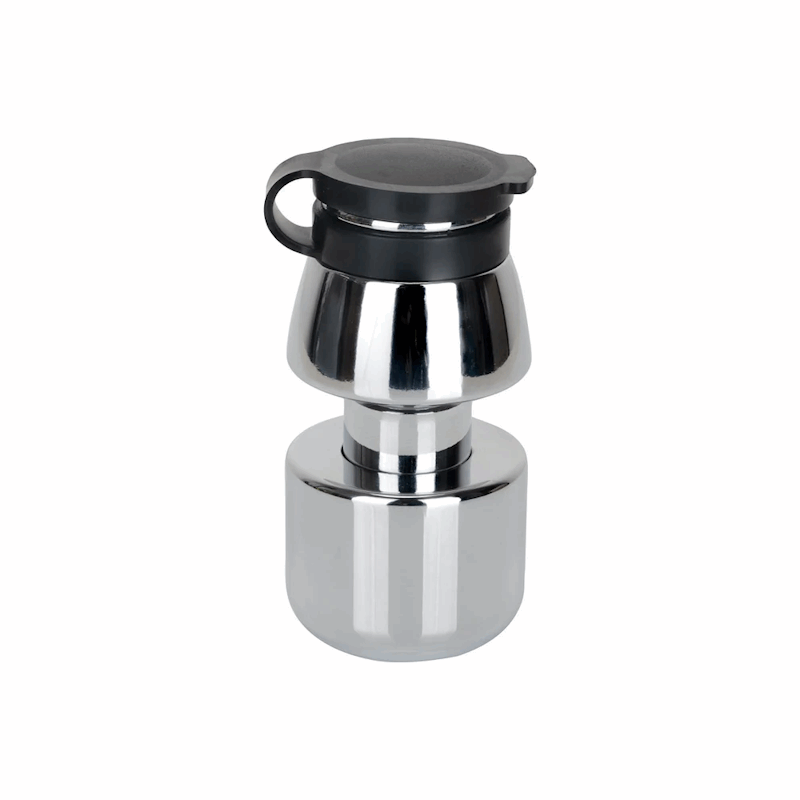
- Pair it with a quality closed-shackle padlock or D-lock
Security is about raising the risk required to steal your bike. That means your security should cause a thief to have to use effort, make a noise and be exposed for a period of time.
If a thief thinks the odds are stacked against them, they'll simply move on to look for the next target.
Bicycle Chain Lock FAQ
Is a chain or D lock better?
Neither is universally better. A D-lock is lighter and more rigid; a chain is more flexible and better for larger anchor points. For high-risk areas, using both offers the best protection and if you don't lock your bicycle to anything, then neither are that useful.
Is there a bike lock that cannot be cut?
No. All bike locks can be defeated with enough time and the right tools. The goal is to delay and deter, not make theft impossible.
Which cycle lock is best?
A Sold Secure Gold or Diamond–rated lock from a reputable brand is best. For high-risk areas, a 12–16mm hardened chain or a high-quality D-lock is recommended.
What's the best way to lock a bicycle with a chain?
Loop the chain tightly through the frame (and ideally the rear wheel) around a fixed, immovable object. Keep the chain off the ground and minimise slack.
Which type of bike lock is safest?
Heavy-duty hardened steel chains (12mm+) and high-security D-locks offer the strongest resistance. Thicker chains (16mm+) provide the highest bolt-cutter resistance but they are not portable.
What is the hardest bike lock to break?
A 16mm hardened security chain or a top-tier Diamond-rated D-lock is among the hardest to defeat with manual tools.
Will bolt cutters cut through a bike lock?
They can cut cable locks and thin chains easily. Chains that are 10mm thick and under are vulnerable. Most 16mm+ hardened chains are impossible to crop by hand-operated bolt cutters.
How do thieves break bike locks?
Most commonly with bolt cutters and portable angle grinders. Poor locking technique and excess slack can make attacks easier.
What grade chain cannot be cut with bolt cutters?
In practical terms, 16mm or thicker hardened security chains are considered resistant to manual bolt cutters.




Leave a comment
All comments are moderated before being published.
This site is protected by hCaptcha and the hCaptcha Privacy Policy and Terms of Service apply.