
Ultimate Garage Security Guide: How to Protect Motorcycles, Bicycles & Tools in Your Garage
There are plenty of garage security guides online, many of them focused almost entirely on recommending products.
While we do manufacture and sell security equipment that works well in garages, this guide isn’t written to push anything on you. Instead, it’s based on what we’ve learned from years of dealing with real thefts, real customers, and real break-ins — including what fails just as often as what works.
If you improve even one aspect of your garage security after reading this, the guide has done its job. The more weak points you address, the less appealing your garage becomes to a thief.
It’s also worth saying that better security doesn’t always mean spending a lot of money. Almost any security is better than none. Even a modest ground anchor and an average chain will deter a thief who isn’t carrying serious tools or prepared to take real risks.
Of course, the quality of the security you use, how much of it you have, and how you deploy it all matter. That’s why we focus on layers — slowing entry, limiting access, and increasing risk.
At Pragmasis, we don’t buy into the fatalistic “if they want it, they’ll get it” mindset. Most thieves fail, give up, or settle for something easier.
In this guide you’ll learn how to:
- Identify common garage weaknesses
- Reinforce doors and side access
- Secure bikes, tools & equipment inside
- Use alarms, lighting and CCTV effectively
- Document and insure your security setup
Good garage security doesn’t just protect your belongings — it stops many thefts from being attempted in the first place.
1. Why Garages are high-risk targets
Garages are a prime target for thieves. They often contain high-value items such as motorcycles, e-bikes, bicycles, power tools, pressure washers and garden machinery — all of which are quick and easy to resell.
Garages are a much less risky target than a house and often contain more valuable possessions than you'd find in a typical shed. Yet most garages rely on weak doors, minimal locking, and no internal security at all.
The good news is that you can make a garage dramatically more secure with a combination of better hardware, a smarter layout, and layered defence. This guide explains how thieves attack garages, what weaknesses to fix, and how to secure motorcycles, bicycles and tools inside a garage to a standard that significantly reduces the risk of theft.
Most garages have three characteristics that attract thieves:
- Thin doors or panels that can be prised open with minimal force
- Weak or outdated locks
- High-value contents are stored inside, often in plain view.
Modern thieves often use quiet but powerful tools — pry bars, cordless grinders, bottle jacks — and they target garages because they can work with partial cover, especially at night.
Your goal is to make your garage look harder to attack than the alternatives. Thieves prefer easy opportunities.
2. Understanding garage types (and their weak points)
Different garage designs have different vulnerabilities. Securing yours starts with understanding where attackers focus their efforts.
Up-and-Over (“canopy”) Door
These are by far the most common — and most vulnerable.
Weak points:
- Can often be levered upwards with a pry bar
- Locking bars may be minimal or absent
- Gaps around the frame can be exploited
- Some models bow easily under pressure
Thieves will often try and prise open a corner of this type of garage door by sliding a crowbar into the gap around the edge of the door. These doors usually have a locking mechanism with a horizontal bar that locates into tabs on the brickwork surround. These are generally fairly strong, but a thief will try and pop these out.
Side-hinged doors
These door types are also very common. They are most commonly made of wood and may have strong but basic hinges.
Weak if:
- Hinges are exposed
- Only held by a simple latch or a padlock
- The timber frame is old or cracked
Roller shutter door
These are generally very strong, but can be defeated:
- Cheap models can be cut
- Bottom rail or manual locking points are weak
- Motors alone don’t provide security
With this type of door, it's more common to see a thief back a vehicle into the door to rip it from its guide rails. Obviously, this will cause a lot of damage to the door itself, but a strong door of this type will resist this form of attack, and the thief will still have a lot of work to do to gain entry.
Sectional door
Far less common in home applications but more common in commercial buildings. These are among the most secure when installed well — but:
- Panels can be forced apart
- Motor must be paired with physical locking
- Tracks need protection from spreading attacks
3. Securing the garage door (Your first line of defence against theft)

It sounds obvious, but thieves usually attack the garage door first. That’s where your biggest gains can be made.
If your garage is connected to your house, does it have another entrance that a thief could try and exploit? For example, is there a side door or a window? If there is access from your garden to a side door, but this door is out of sight due to there being a fence between the garage door and your garage side door, then you may think that the side door is unlikely to be spotted by a thief.
However, a thief is almost always going to try and attack the easiest target. A side door could be the easiest way in.
3.1 Reinforce the Door Structure
The garage door is likely made from metal or fibreglass. They're not that easy to reinforce. However, you can fit a garage defender to make it much harder for a thief to pry the door open or off its runners.
Garage Door Defender

A much as a garage door defender is a bit of a pain for you to remove when you want access to the garage, it is simple to install and presents a very hard obstacle for a thief to defeat.
Some argue that a garage door defender signals to a would-be thief that there's something worth locking up in your garage. That might have a bit of weight to it, but it also signals that you've thought about security.
When we tested a garage door defender in our workshop, it took over 15 minutes to defeat it without power tools (we're not going to tell you how we defeated it).
Realistically the only way you're going to beat a garage door defender is with an angle grinder - and they're noisy.
If you want to improve your up-and-over door security but keep it subtle, we'd suggest using the frame locks mentioned below.
3.2 Upgrade Door Locks
Frame locks

These can be easily added to your garage door and located in the frame around the door. You can install one on each side of the door at around knee height, and this will make it very hard for a thief to try and jimmy the door off the runners.
Hasp and staple
You can also attach a hasp and staple to either side of the door and use a padlock to secure it. This in our opinion isn't as good as he frame lock / dead bolt approach as it requires two padlocks and the hasp is commonly attacked, even if not defeated.
If you do fit a hasp and staple, avoid a cheap one from B&Q and go for a specialist item. Avoid cheap padlocks, too. Choose a padlock with:
- A closed shackle design
- Boron-alloy shackle (12mm+)
- Weather-resistant exterior
Internal barrier

If you can get access to your main garage door via a side door, then you can easily install a barrier that prevents the door from being forced open.
This is a really simple upgrade you can make. Just search for galvanised U-brackets, or you can even use a couple of strong coat hooks. Fix them to the wall towards the top of your up-and-over door and then use a piece of wood to sit in the brackets.
I have this setup in my garage for when I'm away. Even with a bit of 2 x 2 timber, I couldn't break the wood or bend the brackets.
Obviously, if you don't have secondary access to your garage, you can't use this method.
3.3 Secure Side Doors
As we mentioned above, side doors are often weaker than the main garage door. However, they are easy to strengthen.
You can improve your side door's security by:
- Replacing latch locks with deadlocks or mortice locks
- Replacing any hinge screws with coach bolts
- Adding a combination locking bolt, such as a Squire Combi Door Bolt
You can also replace the entire door with a stronger door that uses multiple locking points. For example, an old wooden door could be replaced with a PVC door, which will be intrinsically more secure.
3.4 Don't forget your windows

Windows are an easy access route for thieves. We might think they don't want to break the glass or risk getting cut, but an experienced thief will deal with a window in short order.
You have lots of options to improve your window security:
- Opaque film prevents anyone from seeing through your window and reduces tempation
- Fit window bars across the window internally
- Board up the window with some OSB
- Replace the window if it's a single-paned wooden frame with a double-glazed UPVC item
- If you can't afford a UPVC window, you can screw a sheet of polycarbonate to the window internally. This is far harder to break, and will cause a lot of noise - just make sure it's well secured, so that the thief can't bust it off the fixings.
4. Don't forget: Secure the bike or valuables inside
It will take a concerted effort for a thief to get into your garage.
You can assume that if they do, then they've got experience and are motivated.
Often the scrotes that break into garages work in groups, with a couple of them doing the damage and one on look-out. So they can be more comfortable about spending time attacking the defences in the knowledge that if they get rumbled, there's a bit of safety in numbers.
That's why it makes sense to ensure your valuables (or at least THE most valuable) items in your garage are properly secured.
An anecdote about managing risk:
A friend of ours had a couple of nice motorbikes in his garage and some decent power tools. These were all well secured, but he also had a reasonably nice (£500ish) mountain bike that he called "the bait". This was secured with a fairly average D-lock, but his logic was that if a thief managed to get into his garage, they might spend time going for the bicycle and not trying to attack his roller cabinet full of tools or his motorcycles (which were well secured with chains and a motorcycle ground anchor).
We can't all afford top-notch security for everything that isn't bolted down. But perhaps this story brings home the reality that it's worth thinking about the things you absolutely DO NOT want to have stolen. Then focus your security around that or those items. It's not much good if you buy four average D-locks and they all get defeated. If budget is a big factor, we think it's far better to secure fewer items really well and prevent those from being stolen.
4.1 Install a proper ground anchor

If someone breaks into your garage, it's highly likely it's not going to be just one person. And if it's two or three, they can work together to lift a motorcycle out of a garage and into a van, or drag it out and snap the steering lock, then push it away with the help of a scooter.
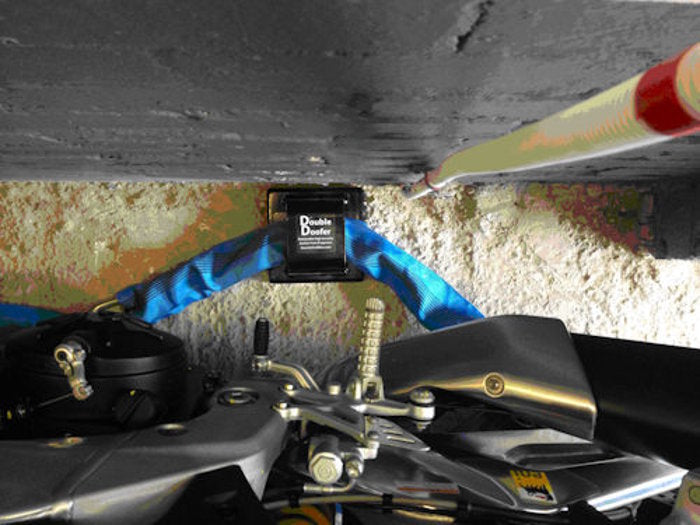
A ground anchor is essential. Paired with a decent security chain, it will be practically impossible to defeat with any tool, except an angle grinder. An angle grinder makes loads of noise, creates loads of sparks and actually takes a fair bit of time and precision to be able to defeat a chain or decent ground anchor.
There are lots of videos of angle grinders involved in motorcycle and bicycle theft but that's mainly because they make compelling viewing. Angle grinders generate sparks and noise, which attracts attention. In practice, thieves prefer bolt cutters or brute force against weak security and a decent ground anchor can't be bolt-dropped.
A thief wants to get in and out as quickly as possible, and fortunately, for them at least, they don't often need more than a set of bolt croppers or a lump hammer to defeat a weak chain, D-lock or cheap disc lock.
Ground anchors can be mounted to the floor or a wall and can be used on brickwork or concrete. At Pragmasis, our Torc Mega ground anchor comes with different fitting kits, depending on the material you're mounting it to.
While you can get a ground anchor for £30, we'd urge you to spend a bit more. Smaller ground anchors often only have a couple of bolts; the opening isn't large enough for a really good chain and the cheaper ones can be smashed with a sledgehammer.
Insurance companies often want to see proof that you've used an insurance approved ground anchor.
4.2 Which chain should you use?

It's important to use a good quality chain, but it's probably more important to use it properly.
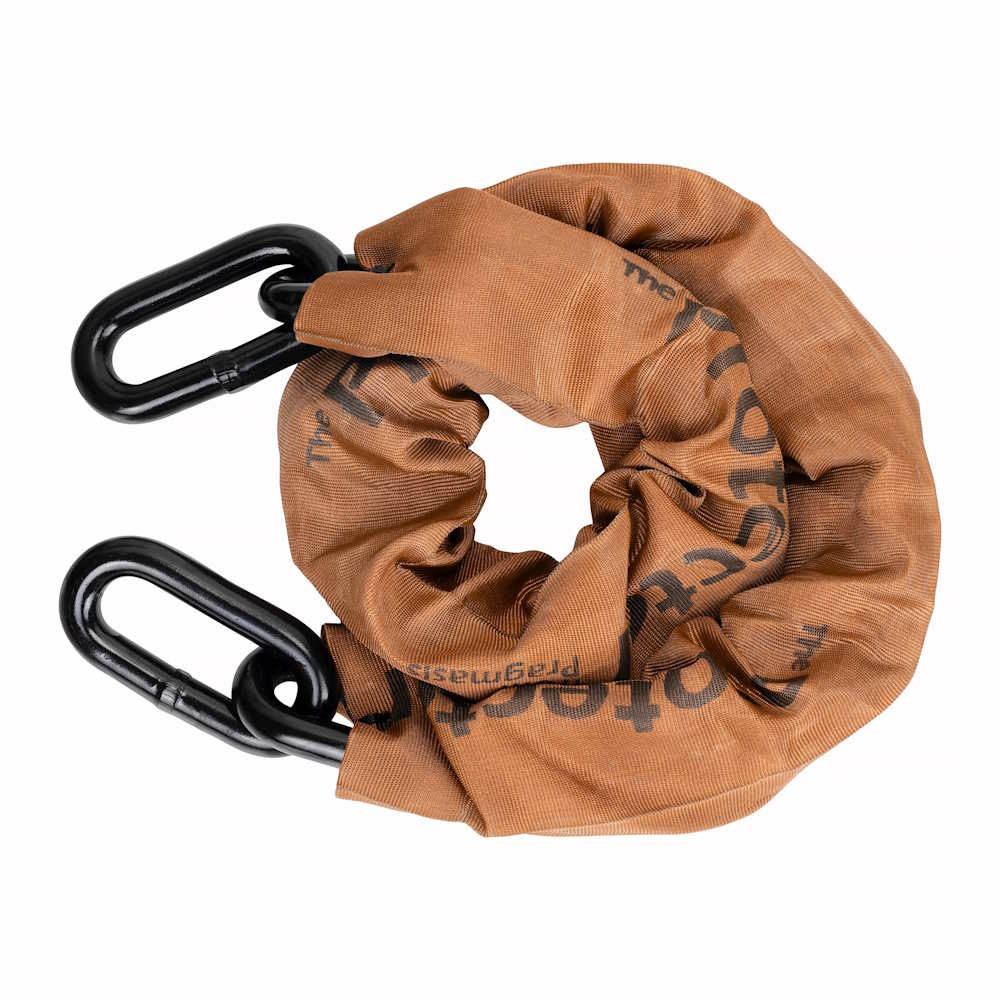
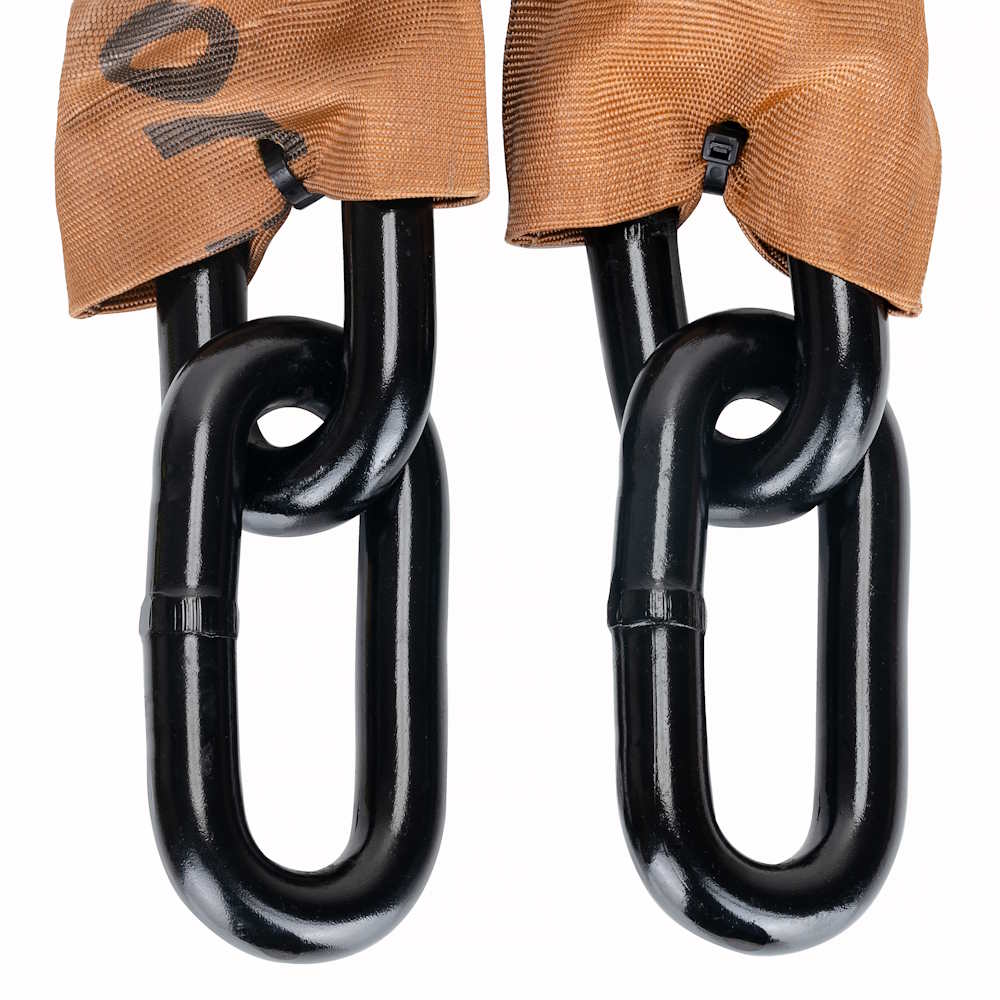
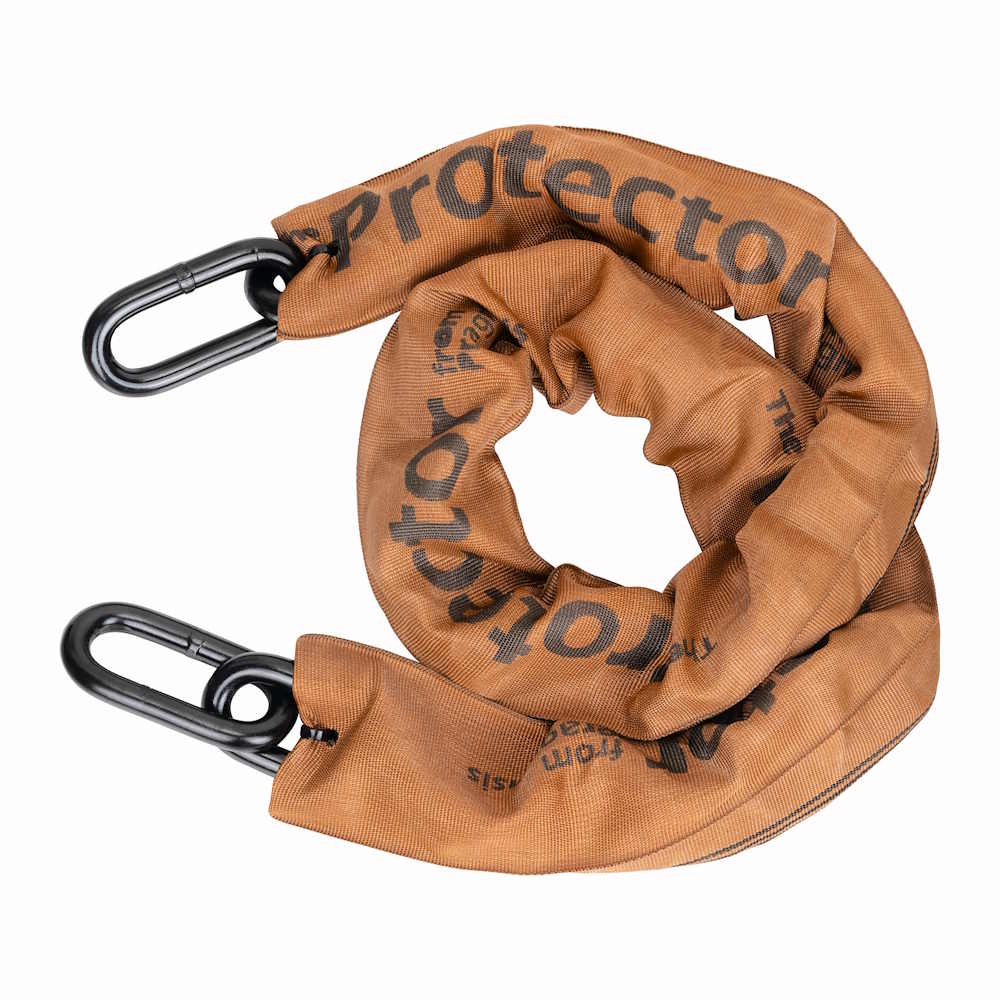
Our 'thinnest' chain is 11mm in diameter and our thickest is 22mm. If you're securing a modest bicycle or garden equipment, an 11mm chain will be fine. A 22mm chain is massively heavy and while secure, it's really not practical for most people.
Our 13mm and 16 mm chains can't be bolt-cropped by hand (you could bolt crop the 11mm, but you would need a big set of bolt croppers and quite a few Weetabix - it's no easy job!).
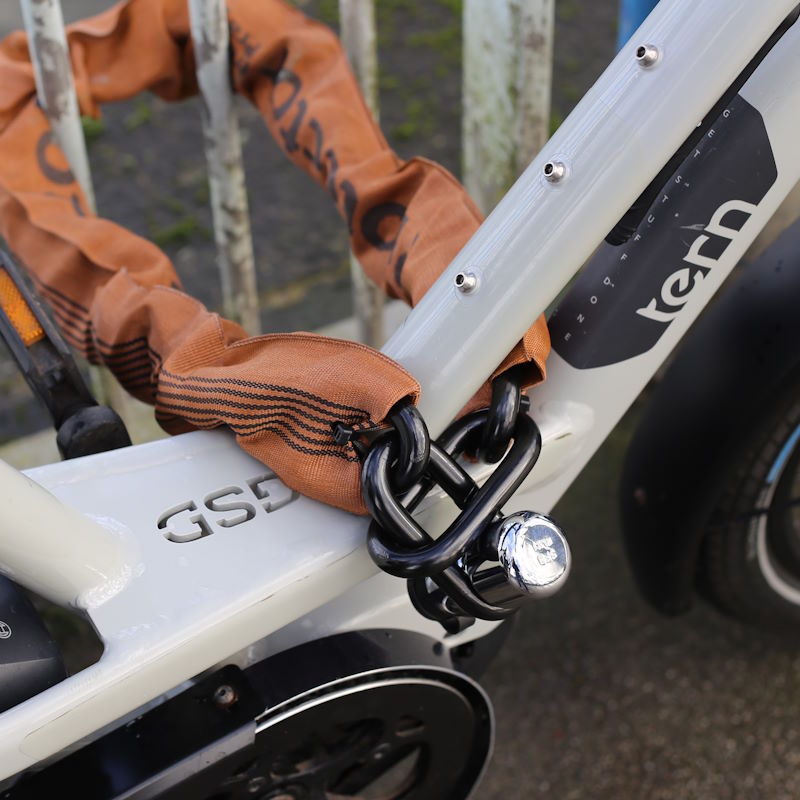
Also, the link shape matters. All of our chains use a round link, and that makes it hard to find a purchase point, whether it be with an angle grinder, bolt croppers or a jack. The square links that you find on cheaper chains are far easier to attack.
Tips for maximising your chain security:
- Keep it off the ground
- Don't just lock it through the front wheel
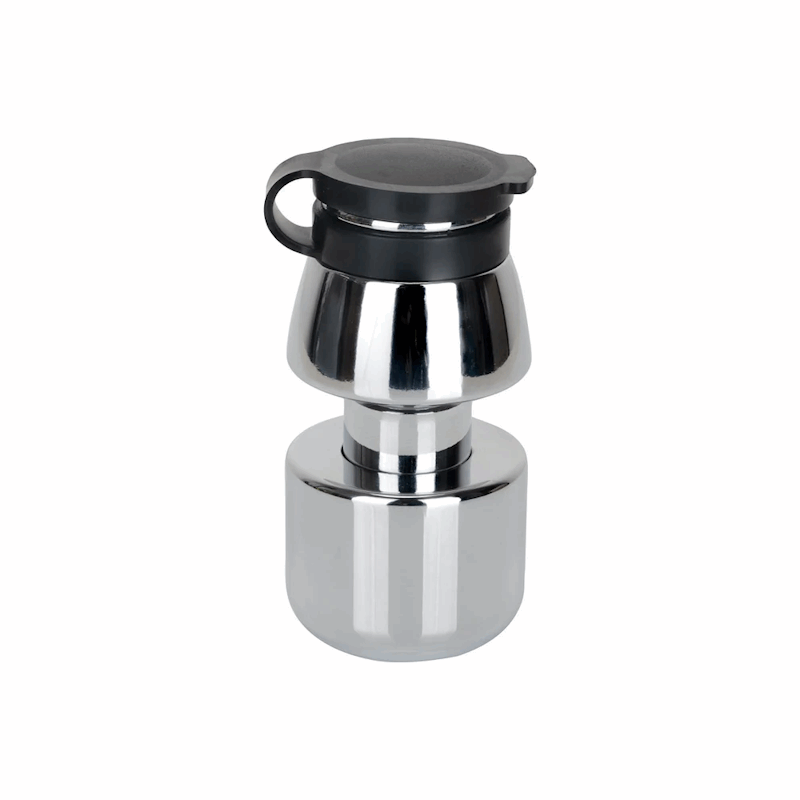
- Pair it with a high-security padlock
- Reduce slack to make it harder to access with power tools
If you're securing a motorcycle with a chain and ground anchor, try and position your setup so that it's hard to get onto the chain. For example, put your ground anchor between a wall and your motorbike. Then a thief will have to get into the gap to access the chain.
If you don't have a ground anchor, do what you can to keep your chain off the ground. A thief using bolt croppers will want to have one arm of the cropper on the floor and put all their weight into the other arm. This isn't possible if the chain is a few inches off the floor.
4.3 The layout matters
There's that old saying of 'it's not what you've got, it's how you use it' - and when it comes to security, it's definitely not just about what you've got.
Place the anchor toward the back or corner of the garage and park the bike, so that it's making access to the anchor harder.
Don’t leave tools, especially power tools, lying around your garage. Use a secure tool chest to block access to valuables if you can.
Avoid leaving your garage door open for extended periods of time if it's visible from other houses or the road outside. If you're washing your bike, think about what signals you're giving off to passersby.
Anecdote on bike covers
Cover your motorcycle or bicycle with a proper cover. I was in an underground car park once and there was an interesting-looking bike under a cover. I was nosey and wanted to know what it was. I tried to lift the cover at a few different points but totally failed. The cover was secured with a chain around the middle (over the bike seat), and chains through both cover eyelets on the wheels. It made me realise that a thief has to take that on first, to even know what other security is on the bike.
Not only that but a cover on your bike stops anyone from being able to glimpse into your garage and know what's there.
A quick garage wall partition?
If you hang your bicycles on your garage wall, can you add in a wooden board (the size and shape of a front door) to obscure this from onlookers? Done well (i.e. with a baton fixed to the wall and the timber sheet fixed to the baton) and you can also loop a chain through the bike's frame and a hole in the timber. It won't be impossible to cut the wood, but it will take some effort.
If you've got two motorcycles, use one of them to guard the other. Or park your car right up against your tool cabinet. Make the thief have to work hard to get your most prized possessions.
5. Alarms, lighting & surveillance
Depending on where your garage is located, it's worth setting up a floodlight and CCTV. Obviously, this is more straightforward if your garage is connected to your house.
In a survey of 'reformed ex-thieves', CCTV came top of their list of deterrents. Much as we know thieves cover their faces, they still don't want to be seen or recorded. It's cast-iron evidence against them. Modern CCTV can be solar/battery powered and will record motion and send you updates to the cloud.
5.1 CCTV
CCTV is an excellent deterrent. You can get a decent camera from firms like Eufy or Yale that can record motion, sound and some maintain their charge with a built-in solar panel. They can store footage on a memory card or their cloud-based services only cost a few quid a month.
Good placements:
- High up and out of reach
- Overlooking your driveway
- Covering the garage door line
- Inside the garage
Choose cameras with:
- Night vision
- Cloud backup
- Reliable motion alerts
- Wide dynamic range for backlit entrances
5.2 Lighting
Motion-activated LED floodlights are best. You can get battery-powered ones with solar panels to keep them charged.
Thieves hate flood lights as they have no idea who's watching them.
Floodlights have many benefits:
- Exposes thieves instantly
- Reduces the time they’re willing to spend
- Enhances your CCTV footage
Install your lights:
- Preferably high up and out of reach
- Pointing at the garage entrance
- Covering any side access points
Make sure your lights aren't shining directly at a neighbours windows.
5.3 Garage alarms
A garage alarm is a handy addition, and they only cost a few quid. Sure, they can be smashed but you can cover them with a gas-flue cage and it'll mean the thief has to battle through that to get access to the alarm. It's another handy layer that doesn't cost a lot.
Options include:
- Wireless PIR alarms (quick install, loud)
- Hardwired alarms linked to the home system
- Smart alarms that send phone notifications
- Motion sensors with sirens
Best practice:
- Use multiple sensors (door + internal PIR)
- Combine with internal anchoring so the alarm buys time
6. Secure the Garage Structure

While most guides mainly focus on physical security products, it's worth mentioning that some garage thieves don't follow the conventional route.
We heard of a guy selling a motorbike from outside of his lock-up garage, which was on the grounds of his flat. The evening after a viewing, two scrotes had broken into his garage by breaking a hole in his garage roof.
They spent some time inside cutting his discs to bypass the disc locks, then grinding off his garage door defender and walking away with his Harley Davidson.
Thieves can and do try anything.
6.1 Walls
We haven't heard of any home garages being broken into via the wall but we do know of a motorcycle dealership that was broken into using this method. Thieves used a massive (and noisy?!) disc cutter to cut a big square out of the wall.
I can't see this happening in a home environ.ment. However, if you have an end-of-the-run garage and it's exposed, it could be an access point. It's best to check your garage walls for:
- Cracked concrete panels
- Rotting timber frames
- Loose cladding
- Panels that flex excessively
You need to take a view on whether you think the wall is a weak point. If so, it's not actually that expensive to beef it up. You can reinforce the entire wall with sheets of OSB or plywood. These will hold together if someone was trying to knock out breeze blocks with a sledgehammer.
6.2 Roof
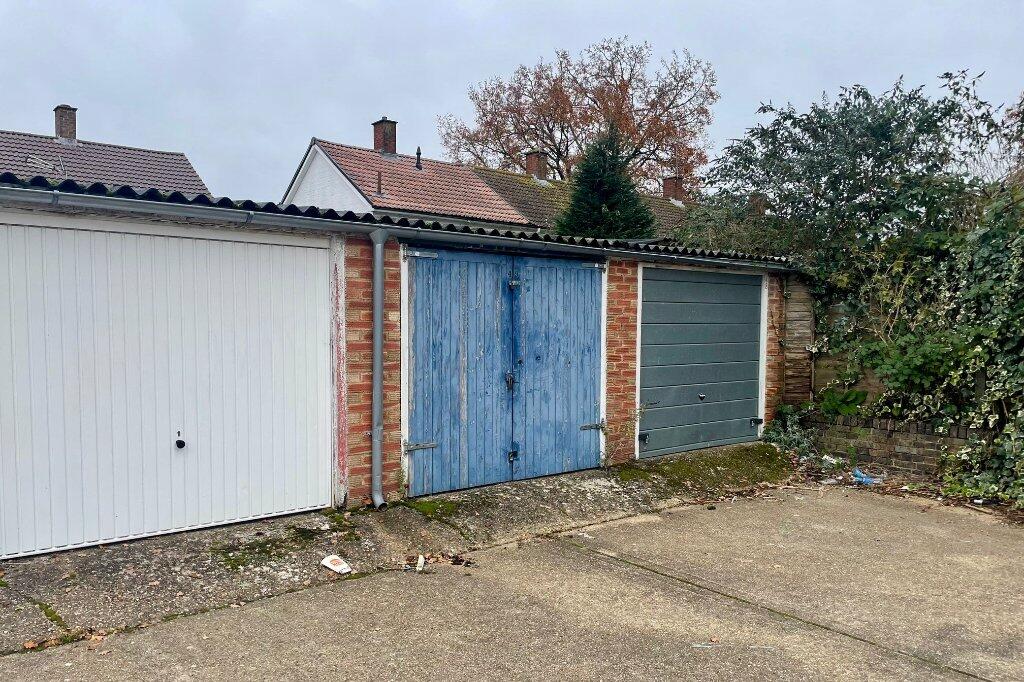
Attackers won't think twice about destroying your roof if they think they can get access to your garage. Most ex-council or communal garages have an asbestos or fibrreglass roof. Some have been replaced with plywood and felt.
While access through the roof isn't something I hear about that often, it's not hard to reinforce your roof. Especially if it looks like the image above.
I would improve security by:
- Fixing panels with coach bolts instead of nails
- Using anti-tamper screws
- Reinforcing fascia boards
- Using support brackets
If I had a garage with an asbestos roof, like the one that was broken into (pictured above). I'd fit a few joists across the garage and then put some OSB between the joists and the roof and fix it all in place. It's worth getting a professional opinion about the asbestos, especially if it's in a poor state.
If you are beefing up your roof, just ensure you have enough clearance for your up-and-over garage door.
No one's getting through that in a hurry.
7. Insurance, Documentation & Theft Prevention
It's always worth preparing for the worst. Take photos of your garage, your security and all the stuff that's in it (or at least the expensive stuff). Your insurance company may want to see this. They may also require proof of forced entry (to ensure you haven't just forgotten to lock your garage).
Insurance often requires evidence of:
- Forced entry
- Approved locks
- Anchors installed correctly
You can make life a bit easier by:
- Photographing your security setup
- Keeping receipts for locks, chains and anchors
- Recording serial numbers (BikeRegister, Immobilise)
- Updating your insurer if you upgrade security
While you're going through this process, it's worth thinking about what life would be like if one of these items were stolen. Would it make getting to work a complete pain? Would it leave you with outstanding finance? What's your excess going to cost if these items were stolen, let alone the cost of repairing any damage to your garage?
Then, think about the security you have and whether it's worth spending a bit more.
8. Quick Garage Security Checklist

You can download our Garage security checklist PDF, with tips on what to check. You can create your own action plan and improve your garage security today.
Our top tips include:
- Secure and reinforce the garage door
- Install a high-security ground anchor
- Use a hardened security chain and closed-shackle padlock
- Reinforce any side doors, hinges and frames
- Add lighting and alarms
- Install CCTV
- Strengthen walls, roof and windows where necessary
- Position bikes and tools smartly
- Keep documentation and serial numbers
- Maintain locks, timber and fixings
Conclusion
Garage security is about layered defence: a strong door, a solid anchor, a high-security chain, effective deterrents, and a well-organised interior.
Each layer adds time, difficulty and risk for a thief — and your goal is to make stealing from your garage simply not worth the effort.
We've seen loads of CCTV where a thief checks out a garage and then, after a few seconds, decides they're not going to be successful.
That's the result you're looking for. Give them as many hurdles as possible, and you'll prove that even if they want it, you're not going to let them just have it.
Start with doing a quick appraisal of your garage. Write down the issues. Then address the most obvious weak point today and then tackle the next one tomorrow.


Leave a comment
All comments are moderated before being published.
This site is protected by hCaptcha and the hCaptcha Privacy Policy and Terms of Service apply.