

Wooden sheds are one of the most common targets for thieves. They’re easy to break into, wooden shed security is often poor, and sheds frequently contain high-value items like bikes, lawn equipment and power tools.
Click here to download our quick Shed Security Checklist PDF.
The good news is that improving shed security is straightforward and highly effective when done properly. This shed security guide might look a little long but it contains all the knowledge we've gained over the past 20 years supplying hard security products that help our customers not only deter attempted theft but defeat the criminals too.
According to insurer Aviva, the average claim for an outbuilding or shed theft in 2024 was £4,205. That's a huge sum but if a thief walks away with an e-bike and a load of powertools, not to mention the cost of repairing a mauled shed, you can easily see how a claim could add up to more than £4,000.
The same survey found that almost 1 in 10 shed owners had no additional security other than the basic security provided with the shed.
Thieves don't care about your property and if they think they can break into your shed, they'll have a go. Even if they're unsuccessful, they'll leave you with a big headache. The best thing you can do is make your shed look like a tough target and deter the scumbag from trying.
This guide explains how to secure a wooden shed, protect the valuables inside it, and choose the right locks, anchors, chains, and reinforcements. These steps dramatically reduce the risk of shed break-ins.
Why Wooden Shed Security Matters

Shed crime has increased across the UK, and most wooden sheds are vulnerable by default. Thin timber panels, weak doors, cheap hinges and basic padlocks make it easy for a thief to get in.
A typical attack involves:
- Forcing a weak hasp or padlock
- Unscrewing exposed hinges
- Kicking through thin shed walls
- Prising open the roof
- Smashing an unsecured window
Upgrading your shed security protects your possessions and makes your shed a much less attractive target.
Listed below are the areas we think you should consider, in order to improve your shed's security and reduce the chances of it being broken into and your valuables stolen.
1. Assess the quality of your shed
(Is it worth reinforcing or should you start again?)

For many of us, the shed we have came with the property. That's why, before you embark on a process of improving your shed's security, it's worth considering the following:
- What condition is the shed in?
- Will the shed accommodate everything you need it to?
- Is your shed in the best position for your needs?
- Is the shed built on a solid foundation?
- Does the shed have windows you don't need or a door that isn't big enough?
A typical shed will last around 10 years. Some of the higher-quality pressure treated ones can last for 25 years. However, a shed is like Trigger's broom - you'll no doubt need to maintain and replace parts of it over the years and it's longevity is not only affected by the quality of the timber but the quality of the build.
If a shed is built directly onto the ground it's likely it will rot or suffer from subsidence. Both of these will affect the shed's security and ability to withstand an attack.
There's not a lot of point in spending time and money beefing up your shed if it isn't going to fulfil your needs. As pictured above, you can always replace the exterior panels (in this case with CDX plywood, which is easy to shape and mount). If the general structure of the shed is sound, then any additional efforts you make to improve the security using hardware will pay off.
On the flip side; if the shed's in poor condition, would it be better to scrap it and start again?
So, first things first, go and take a good look at your shed and assess whether you want to beef it up or start again.
2. How to secure a wooden shed door

(Your First and Most Important Line of Defence)
If you can keep a thief out of the shed, you’ve pretty much won. External shed security is the area you should focus on first. This means you have to assess your hinges, your door locking mechanism and your roof.
Most sheds are supplied with basic components, to keep costs down. The image above shows a typical Brenton bolt, supplied with a new shed. It's only secured by screws and it can easily be defeated. Don't assume the standard Brenton bolt or padlock supplied with your shed is up to the job.
Upgrade the shed hasp & staple or Brenton bolt

Strong door locking hardware is essential for any secure wooden shed. We'd opt for a Hasp & Staple over a Brenton bolt, as these can be made from thicker, stronger materials.
The image above shows the Squire No.8 Hasp & Staple which we sell. It's a fundamentally good product but we can also supply this with an upgrade kit which replaces screws with bolts, making this possibly the best value for money hasp on the market.
A hasp & staple comprises a hinged hasp that is typically fitted to the side of a door, and a loop on a plate (the staple) that is fitted to the surrounding structure/doorframe and that is protected by the hinged plate of the hasp when secured. There are many of these hasps on the market, and most are very poor and are easy targets for a thief! This is one of the key reasons why shed crime is on the increase: Shed doors are generally not properly protected!
Of course, you don't have to buy a hasp from us. Look for door hardware that features as many of the following as possible:
- 5–6mm+ hardened steel construction
- A welded staple loop
- Hidden fixings once locked
- A recognised Sold Secure rating
- Fixings long enough to reach solid timber framing rather than just into the cladding
- Supplied with coach bolts
Use a high-security shed padlock (not like the one pictured!)

The padlock is the obvious area that thieves quickly assess. If, like the image above, the padlock's not up to the job, there's no point in investing your time and effort into improving other areas of the shed.
While some thieves use portable angle grinders, most would prefer not to make any noise and will operate with a few basic tools. Even a compact set of bolt croppers will make light work of a cheap padlock, like the one pictured above. If your defence looks like this it's really no defence at all.
Look for a padlock that features as many of the following:
- A closed-shackle padlock to protect against bolt-cutters
- Hardened boron alloy shackle (10mm minimum)
- Weather-resistant body
- Anti-pick and anti-drill features
- A relevant Sold Secure rating (Bronze, Silver or Gold)
Additional door security

For additional security, you can always mount two hasp and staples to your shed door or choose a combination bolt, like the one pictured above. A combination lock means you don't have to worry about keys. These are quite cheap (under £30) and provide an additional layer of defence.
Reinforce the shed hinges

Many shed break-ins happen when thieves attack the hinges, not the lock. Check out your shed's hinges, are they secured in place with woodscrews? If so, you're in good company; most shed hinges are basic at best.
You can easily improve the hinges you have by fitting the Pragmasis shed hinge security bolt kit.
These kits use coach bolts to replace the wood screws. Not only do the coach bolts have no 'head' so they can't be unscrewed like a typical woodscrew but they also pass through the entire door frame and are secured from the inside with a nut, making it very hard for a thief to tear the hinges from the shed.
You can also replace your hinges with stronger hinges and a security bolt kit. Or, depending on your shed's design, you may be able to replace the external hinges with internal ones.
Any upgrade you can do to your hinges is money well spent. Improve your hinge security with:
- Stronger hinges
- Coach bolts, not screws
- A reinforced door frame to handle force attacks
Strong hinges are essential for shed security and are often overlooked.
3. How secure is your shed's roof?
(Spoiler alert: probably not very)

Not all sheds are designed to be secure. Not all sheds are in good condition. Thieves can spot these things and try to exploit any weakness.
A common area many shed owners forget to consider is the roof. In most cases, the roof is constructed and held in place with nails. A roof can be lifted off or pried open. Thieves may do this just to get a look inside your shed, rather than breaking in using this approach.
You can easily secure your shed's roof with corner brace brackets that are readily available from your local DIY store or places like Toolstation or Screwfix. A pack of 10 brackets can be had for a fiver. They tend to come at a 90-degree angle but can be gently eased open to suit the pitch of your shed's roof. Screw one side to the roof timber and the other to your shed frame.
4. Install a proper shed anchor

(Essential for bike and tool security)
Even with a secure door, a shed isn't impenetrable. A thief can sometimes find a way in, which is why an internal shed anchor is critical for securing valuable items.
Recommended shed anchor options
Option 1: Fit a Shed Shackle
The Super Shed Shackle is specifically designed for wooden sheds. It provides a secure anchor point, to which you can loop through your security chain or D-lock and attach it to your bicycle, motorbike or lawnmower. At 8mm thick, it's a seriously heavy duty bit of kit.
The Super Shed Shackle:
- Takes minutes to install
- Is ideal for bicycle stores
- Doesn’t require concrete
- Is a highly effective deterrent
The Super Shed Shackle comes complete with a comprehensive fitting kit, which includes all the fittings required to mount it inside your shed, including a drill bit.
A good tip is to mount it in a position where the thief can't easily see the external coach bolts from the exterior of the shed. Also consider mounting it where your bicycle will obstruct the shackle, making it even harder for a thief to get any tools onto it.
Option 2: Torc Ground Anchor

Designed for use with a substrate, such as concrete or brick, the Torc ground anchor was designed with garages in mind, however, if your shed has a concrete floor, you can install a Torc anchor.
The Torc Ground Anchor offers another fixed anchor point for expensive bikes, tools and garden equipment.
If your shed floor is concrete, you can cut away a small section of the wooden floor and fit a security ground anchor, like the Torc Mega, Double Doofer or Beefy Bridge. If your shed isn't built on concrete, you can cut a section of the floor away, dig out the ground to a depth of around 12-inches and use ready-mixed concrete to create a solid block. Then drill into this block and fit the ground anchor. See the picture below for an example.
A shed anchor dramatically increases the time, tools and risk required - and for most thieves, an anchor is simply not worth taking on.
5. Use a high-security chain and lock
(Increase a thief's risk of getting caught)

Whatever anchor you choose, it's only as good as the chain and lock you're securing to it. A cheap chain or padlock can be defeated with a bolt-cropper in seconds.
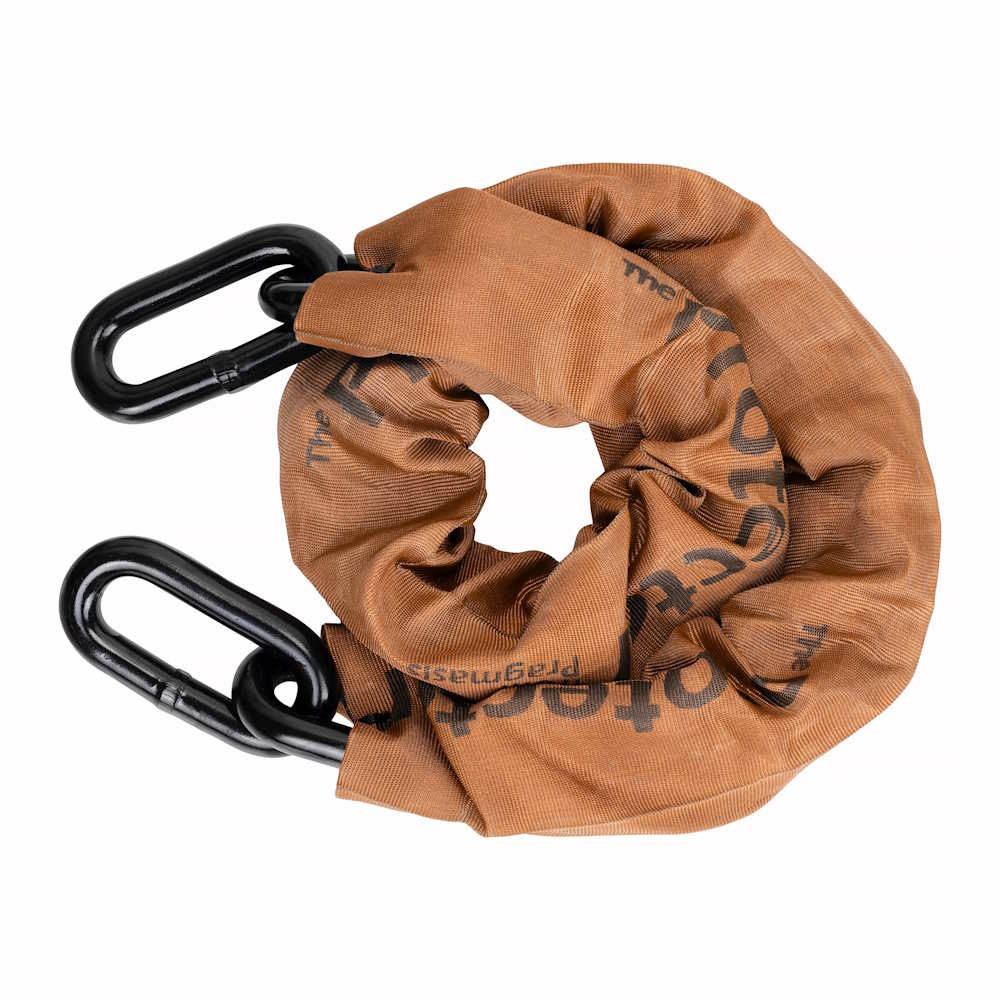
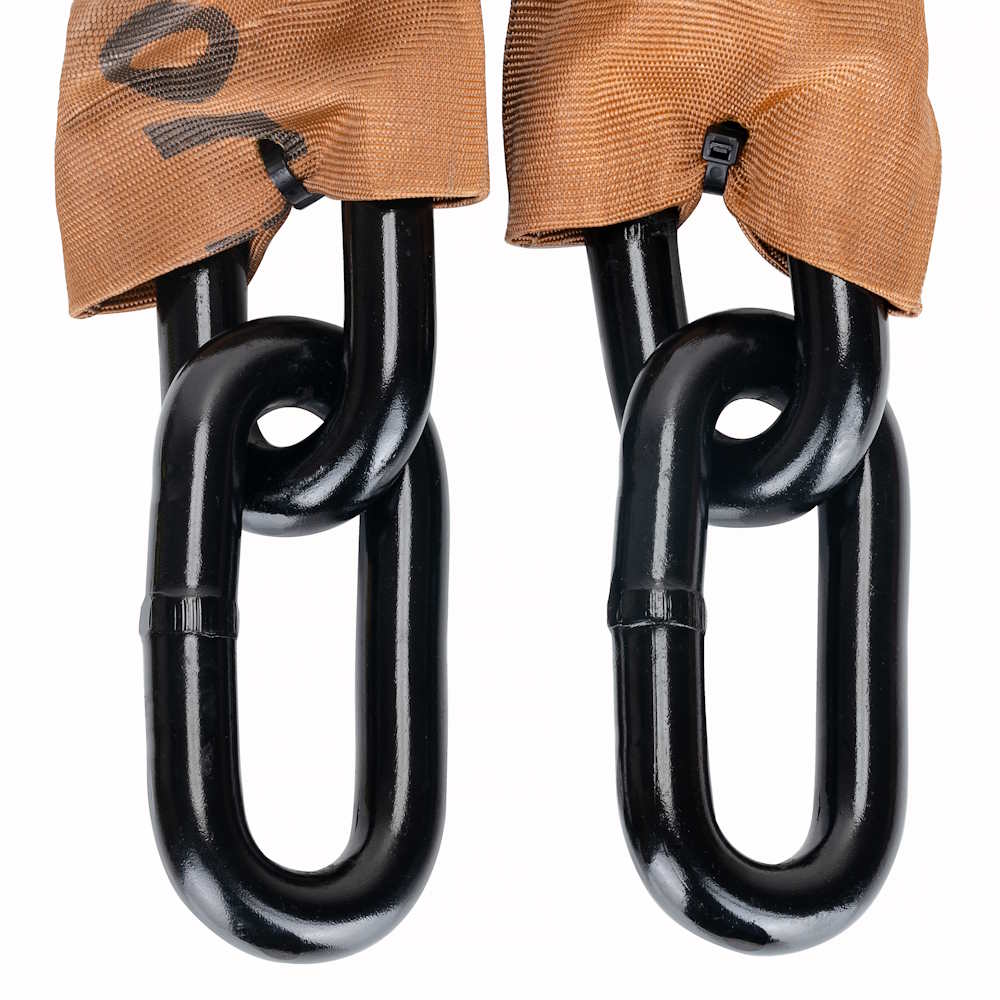
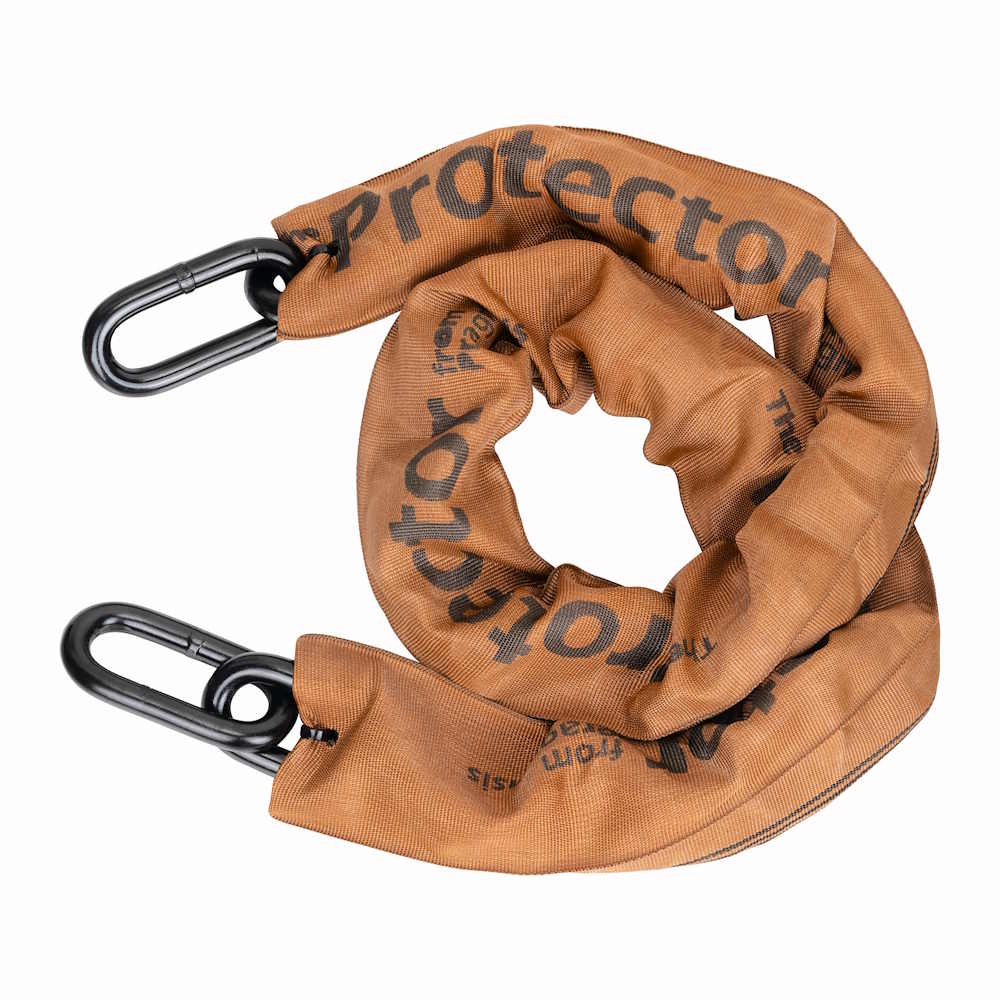
Our Protector range of security chains starts at 11mm gauge, all the way up to 19mm. All of our security chains have been tested to the Sold Secure Gold standard and are approved by Secured by Design, the Police preferred specification.
The 11mm Noose chain is a good option for lightweight portable security or for securing lower value items, such as a hedge strimmer or chainsaw.
However our 13mm chain is the minimum we'd recommend for long-term bicycle security. The 13mm chain is still portable but if the chain is going to remain in the shed, then weight isn't a big issue and we'd recommend you go for our Protector 16mm security chain or, if you want the ultimate, the 19mm version.
“As a guide, spend about 10% of the cost of your bike on a lock. Choose a ‘Sold Secure’ badged bicycle lock with a diamond, gold, silver or bronze rating.” - Police Scotland
While the thicker chains are heavy, if you don't need to take the chain anywhere, go for the thickest security chain you can afford.
Choosing a shed security chain

For bikes, consider:
- A 13mm+ chain made from heat-treated high-quality steel
- A recognised security rating, such as Sold Secure Gold
- Links that are round not square, as these are much header to attack
- A length that allows easy positioning without slack and without the chain resting on the floor
Using it properly
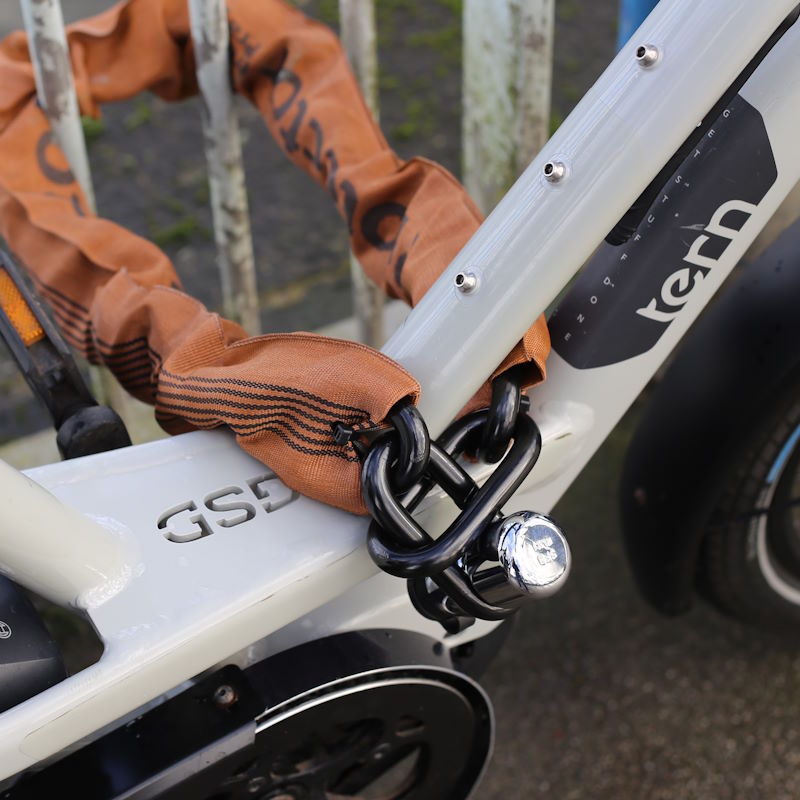
- Lock through the bike frame
- Keep the chain off the ground to reduce cutting leverage
- Keep the chain as tight as possible against the anchor to prevent access
Choosing a secure chain lock

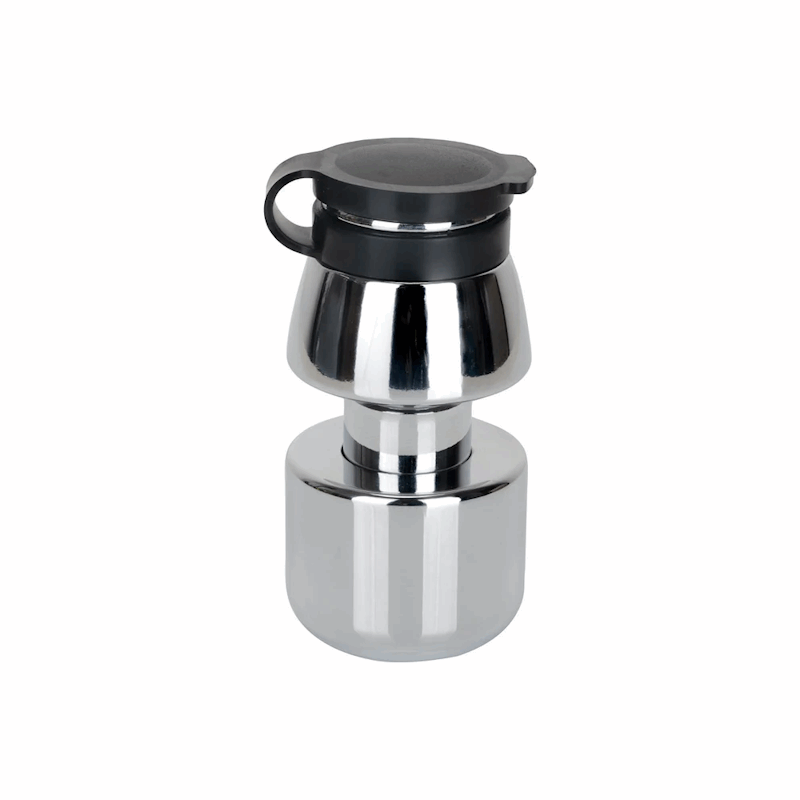
If a thief has managed to get into your shed, it's likely they're using professional tools, such as a portable angle grinder or heavy-duty bolt croppers. You can still repulse an attack with a high-quality padlock or D-lock.
Angle grinders are becoming more popular with opportunist thiefs as they are portable and efficient. However there are now anti-angle-grinder D-locks, which can resist an attack for longer than a typical padlock. These D-locks are a great addition to your shed security, especially if you're protecting your bicycle, as the D-lock can then also be used when you are out and about. Pictured above is the Squire D16 Max, which is virtually impossible to cut with a portable angle grinder.
- A closed-shackle padlock to minimise exposed metal and resist bolt-cutters
- A minimum of 10–13 mm+ hardened boron-alloy shackle (far stronger than basic hardened steel)
- A recognised security rating, such as Sold Secure Silver or Gold
- A solid steel or laminated steel body (avoid zinc or cheap cast bodies)
- Weather-resistant construction — sealed keyway, rust-resistant materials
- Anti-pick and anti-drill protection, especially for sheds in quiet or remote locations
Remember: if a thief's got this far, a cheap chain or padlock is going to do you no favours.
6. Secure the shed’s other weak points
(The other areas a thief will try and exploit)
Some thieves will scout out your shed before deciding on whether it's one they want to break in to. They can often often bypass the door entirely and attack other weak points on wooden sheds.
We've heard of shed that have been lifted up and tipped over due to not being secured to the ground. Windows are also an issue, as a thief can check out the contents of your shed through its window and size up the level of security they have to defeat.
Secure shed windows

Windows are handy to have, especially if you spend a bit of time working in your shed. However they are an obvious weak point.
Your shed might have been in situ when you moved into your house. First consider whether you need windows at all. You can fit high-powered USB-chargeable LED lights, to illuminate your shed's interior, meaning you can do away with widows all together.
If that's the case, you can board up your windows from the inside, by screwing a piece of OSB or plywood around the window frames.

If you want to keep your windows but deter access, you can fix a bar of 2x2 baton across the centre of the window and then mount a metal strap to the baton. If you use coach bolts, this will be very secure and very hard to defeat.
You can also fit a roller blind, which will enable you to easily hide the interior of your shed from the casual observer.
If you do want to keep your windows and you're securing a larger item, such as a bicycle, motorbike or mower, you can obscure it with a bike cover. Not only does this prevent the thief seeing the item but it also obscures the security, adding some unknowns for the thief and reducing the chances of them taking on your shed.

Another good method if you want to keep your windows but reinforce them is to screw polycarbonate sheets to the inside of the window frame. Done properly and you'll effectively have double-glazed your shed too. A 2mm thick polycarbonate sheet has 200 times the impact strength of glass and can withstand hammer blows. The image above shows a polycarbonate sheet secured to the interior window frame of the shed. You can buy custom sized and pre-drilled polycarbonate sheets online.
Improve your shed's window security by:
- Replacing glass with polycarbonate
- Installing internal steel bars or mesh
- Adding internal shutters
- Using proper window locks
- Removing unnecessary windows entirely
Reinforce shed walls

Sheds are supplied at different quality levels and most manufacturers are looking to keep costs down, so they can remain competitive. However, there are a handful of cost-effective ways you can improve the security of your shed.
Strengthen walls by:
- Adding OSB or plywood sheets inside
- Using steel plate around high-risk areas
- Treating wood regularly to prevent rot
- Reinforcing corner posts and rails
Easily the cheapest way to do this is using sheets of OSB or plywood. They only need to be 9mm thick.
Not only can you improve the shed's security by adding panels of OSB or plywood board, but you can also fill the gaps with insulation, like QuinnTherm or Earthwool. If a thief tries to pry the outer shiplap or tongue and groove panels from your shed, they'll be faced with another layer of board, which will be incredibly difficult to bypass.
Anchor your shed to the ground


Ideally your shed will have been built on a concrete or solid base. This not only helps the shed remain strong but also prevents it from rotting due to being in contact with soft ground. However not all sheds have been tethered to the ground and this is a potential weak area if a thief spots it.
Thieves can tip a shed over, which helps them break the exterior structure. This is easily solved, either by drilling into the concrete base and fitting an anchor which you screw to the shed. Or, if your shed has been built on soft ground, you can buy stakes that are used to secure a football goal. Twist them into the ground next to the shed and then fix them to the shed's frame, ideally with coach bolts and not screws.
A thief will avoid a shed that looks difficult and noisy to attack and these simple additions mean the thief quickly runs out of opportunities.
7. Shed security extras; from alarms to security lights

Shed alarms
A shed alarm can be a useful additional deterrent, especially in quiet areas. However, it has a key limitation:
The alarm only sounds once the thief is already inside.
This means you must still secure the door, anchor, chain and windows properly. If it's a choice between a £20 padlock and a £30 alarm or a £50 padlock, we'd go for the £50 padlock every time.

If a thief manages to enter your shed, an alarm is good from the perspective of making their life more difficult and putting them under pressure. If you buy a wireless alarm, make sure you check the batteries regularly and consider fitting a gas flue guard (pictured above) to prevent them from easily smashing the alarm to silence it.
Alarms work best when combined with:
- A Shed Shackle or ground anchor securing your possessions in your shed
- A high-security chain and quality lock connected to the anchor
- Strong door hardware
- Good exterior lighting
Security lights
We'd recommend a floodlight over an alarm. If you can mount a floodlight on your house that covers the access to the shed, that'll work well to deter a thief from even attempting to break in.
You can also get a solar-powered floodlight and CCTV which you can mount higher-up on a wall, facing the shed. However we'd opt for a more powerful wired-in floodlight for maximum illumination. Thieves want to operate without anyone knowing they're there. A powerful floodlight prevents them operating in the way that they'd prefer.
Wireless shed CCTV

Modern technology means you can install a CCTV camera in your shed that's kept operational by a small solar panel that mounts to your shed's roof. If you can run power from your house to your shed, then you can fit a mains-powered CCTV camera.
These CCTV camera can upload to the cloud and can be configured to alert you to any movement. This is a fantastic advance in technology and ideally suited to a shed. The moment a door or window is breached, the camera will start recording. Pair this with another camera mounted on your main property and pointing towards the shed and you'll likely be notified of any activity prior to your shed being attacked. Even if a thief smashes or takes the camera, it will have already record footage.
Some brands that produce great security cameras are TP-Link, Eufy and Yale.
A simple dog bowl
You may have a dog and it may be a great deterrent, alarm and executioner in one. However you might have a dog that would sleep through a thunderstorm.
But you can get some of the benefits of a dog, without having to pick up any poo on a daily basis.
Leaving a dog bowl by your shed or placing a "mind the dog" sticker on the shed or side gate to the house will make a thief think twice about hanging around where their not wanted. Hang a dog tennis ball wanger by the shed door to add to the impression that you have a dog.
In summary: How to Secure a Wooden Shed
To properly secure a wooden shed and protect your bikes and tools:
- Upgrade the shed door with a strong hasp, padlock and reinforced hinges.
- Reinforce shed weak points—windows, walls and roof.
- Install a shed anchor (Shed Shackle or ground anchor).
- Use a high-security chain and decent lock, matched to your item's value.
- Add a shed alarm or floodlight as a final deterrent.
Shed Security FAQ
How do I secure a wooden shed from thieves?
Secure the door using a high-security hasp, a closed-shackle padlock and reinforced hinges. Install an internal anchor (such as a Super Shed Shackle or ground anchor) and use a hardened chain to lock valuables. Reinforce weak points like windows, walls and the roof, replacing nails for screws or coach bolts. Add an alarm or CCTV for extra deterrence.
How much should I spend on a padlock for a shed?
Instead of focusing on budget, focus on the padlock's features. A Sold Secure Gold-rated padlock will feature a thick hardened steel shackle and if you opt for a closed-shackle design, it will prevent the thief from getting tools on to the shackle. The Squire SS50S padlock is a great shed lock and the SS50CS is even better. Expect to spend upwards of £50 for a decent padlock.
What is the best lock for a wooden shed?
A closed-shackle hardened padlock with a Sold Secure rating is generally the best choice. Look for a boron alloy shackle (10–13mm+), anti-pick protection and weather resistance.
How do I reinforce a shed door?
Strengthen the door frame, use coach bolts instead of screws, install hinge bolts, and replace the hasp with a heavy-duty welded model. Thin shed doors benefit from an internal plywood or steel reinforcement plate.
How do I secure a bike in a shed?
Fit a proper internal anchor such as a Super Shed Shackle or Torc Ground Anchor, then lock the bike through the frame using a 12–16mm hardened security chain and matching padlock. Keep the chain off the floor and as tight as possible.
Can you put a ground anchor in a wooden shed?
Yes. You can cut a hole in the floor and install fresh concrete for a traditional ground anchor, or use a product designed specifically for timber such as the Super Shed Shackle, which avoids the need for concrete.
How do I protect shed windows from break-ins?
Mount a polycarbonate window panel on the inside of the shed, fit internal bars or a steel grille, use proper window locks or internal shutters, or remove or board-up the window entirely if it’s not needed.
Are shed alarms worth it?
Shed alarms are a useful additional deterrent, but they activate only once the thief is already inside. They work best when combined with a secure door, strong anchor and a good chain.
What are the cheapest ways to improve shed security?
If you're on a budget and want to do the best you can with a couple of hundred quid, we think the most cost-effective upgrades are:
- Replacing weak screws with coach bolts
- Upgrading the hasp and padlock
- Reinforcing windows with polycarbonate sheet or covering them with strong board
- Bracing the interior of the shed with metal brackets
- Fit a shed anchor such as a Super Shed Shackle
Every small improvement you make to your standard shed will reduce the chances of you becoming a victim of a shed theft. It's time and money well spent, to reduce the anxiety of having your shed broken into and all the headache and heartbreak that goes with a theft.



Leave a comment
All comments are moderated before being published.
This site is protected by hCaptcha and the hCaptcha Privacy Policy and Terms of Service apply.