Security Glossary

There is a lot of jargon and a lot of acronyms in the security word. We've published this glossary to help you better understand the terminology used on this website.
Angle Grinder - A handheld power tool with an abrasive cutting disc. It is one of the most common tools used to attack chains, padlock shackles and D-locks, so resistance to it is a key consideration when choosing security equipment.
Anchor Point - Any fixed, immovable point you can secure a bike or motorcycle to, such as a ground anchor, wall anchor or a purpose-built rail. A lock or chain is only as effective as the anchor point it is attached to.
ART - A star rating (up to 5 stars) for bicycle locks, awarded by the Dutch foundation Stichting ART. It is common on cycle locks sold in mainland Europe.
Bolt Cutters - Long-handled cutting tools that use leverage to cut through chains, cables and padlock shackles. Hardened security chain is designed to resist them.
BS EN 12320 - The European standard for padlocks, covering resistance to attack and the grading system (1 to 6) referred to under CEN below.
Bump Key - A key cut to the maximum depth in every position and tapped with a mallet or similar tool to “bump” the pins of a pin tumbler lock into line. Locks with anti-bump features are designed to resist this.
Case Hardening - A heat treatment that produces a very hard outer layer over a tougher, softer core. It resists cutting and sawing while retaining some resistance to shattering.
CEN - Comité Européen de Normalisation (the European Committee for Standardization). It publishes the standards used to grade padlocks, which are given a security grade from 1 to 6, with 6 being the highest. See also BS EN 12320.
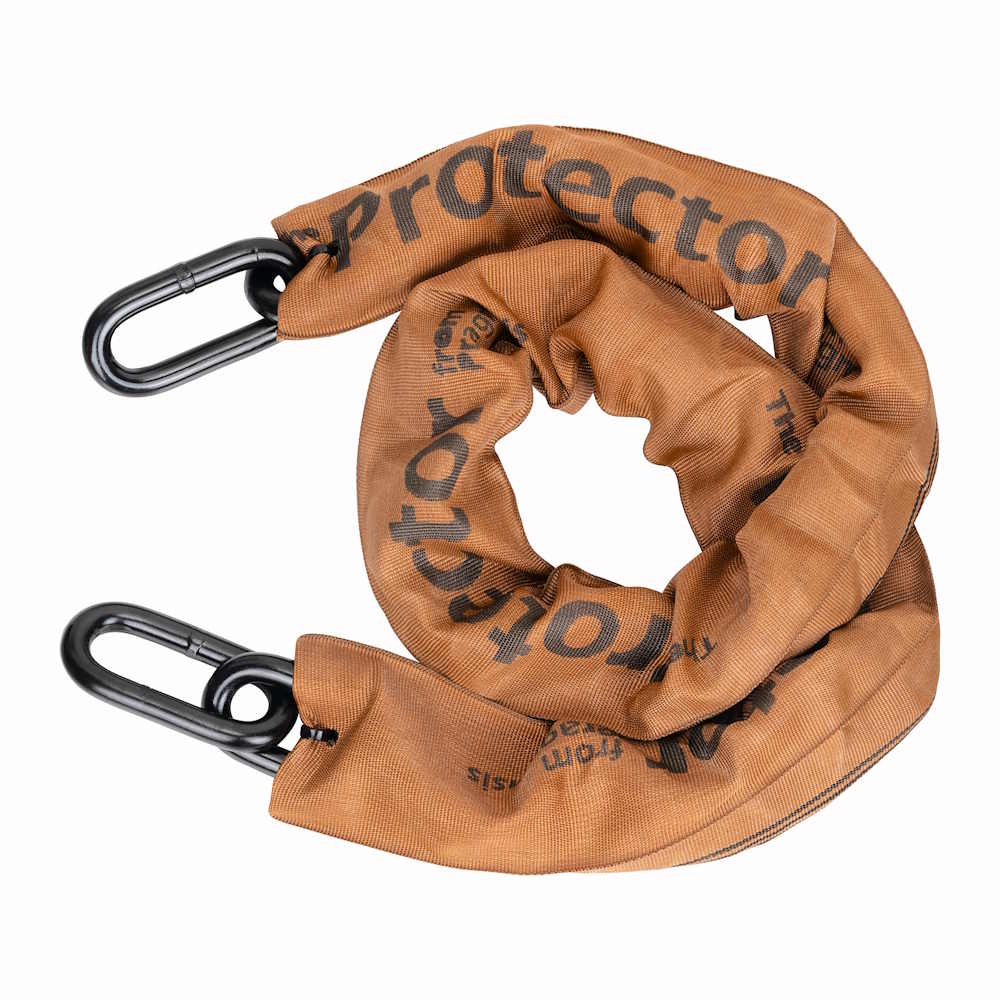
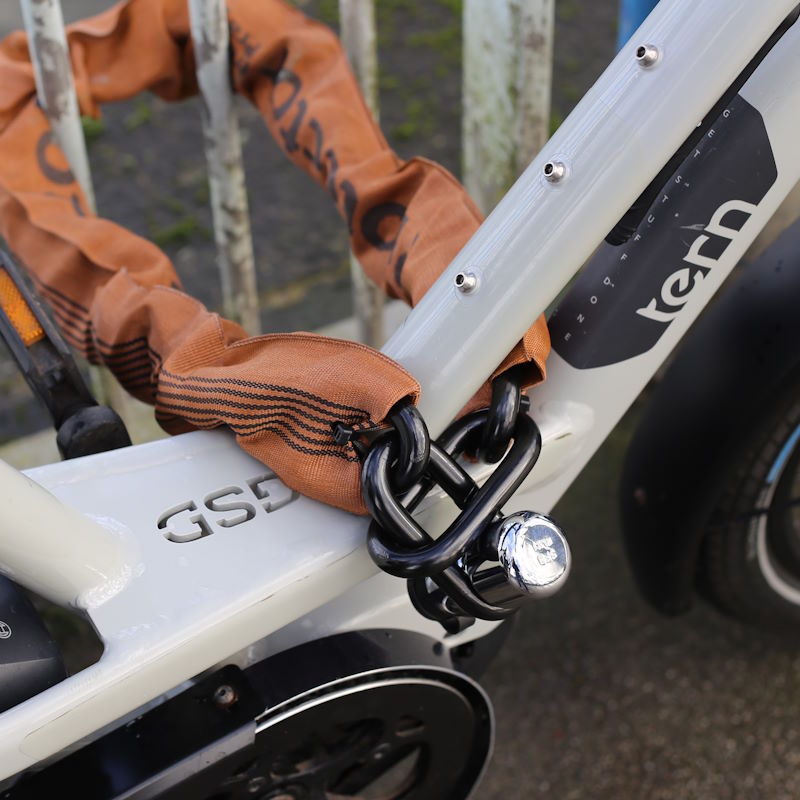
Chain Sleeve - A fabric or plastic cover over a security chain that protects your bike’s paintwork and finish from scratches.
Closed Shackle - Often referred to as CS, this is a type of padlock where the lock body partially envelops the shackle, making it harder to attack. See also Open Shackle.
D-Lock (U-Lock) - A rigid lock with a U-shaped shackle that locks into a crossbar. D-locks are compact and strong, but they offer a limited reach and can be hard to fit around larger objects.
Disc Lock - A compact lock that clamps through a hole in a brake disc, which stops the wheel from turning. It is usually used as a visual deterrent and for short stops, and is best paired with a chain and anchor.
Expanding Bolt - An anchor bolt that expands inside a drilled hole as it is tightened, gripping the surrounding masonry. It should not be used close to the edge of a wall or slab, where it can cause cracking.
Ground Anchor - A heavy-duty fixing point bolted or resin-set into a concrete floor, wall or other solid base so a bike or motorbike can be locked to it.
Hardened Steel - Steel that has been heat treated to increase its resistance to cutting, sawing and impact. How hard a steel can be before it becomes brittle is a trade-off that security product designers must balance.
Hasp and Staple - A two-part fitting commonly used on sheds, gates and doors. The hinged plate (hasp) folds over a fixed loop (staple), and a padlock is fitted through the loop to secure it.
Heat Treatment - The controlled heating and cooling of metal to change its properties, such as hardness and toughness. The quality of the heat treatment strongly influences how well a chain or shackle resists attack.
Insurance Approved - A lock or security product that meets the requirements of an insurer, which usually means it carries a recognised rating such as Sold Secure. Always check your own policy, as requirements vary between insurers.
Keyed Alike - A set of locks that are all operated by the same key, so you don’t have to carry a different key for each one.
Link Thickness - The diameter of the steel bar that forms each link of a chain, usually measured in millimetres (for example 13mm or 16mm). Thicker links generally offer more resistance to cutting and leverage attacks, but add weight.
Noose Chain - A chain with a large loop or link at one end, so the other end can be passed through to form a noose around a wheel, frame or anchor. This can be quicker to use than a standard chain and removes the need for a lock at the anchor end.
Open Shackle - A padlock where the shackle is largely exposed, making it more vulnerable to cutting and leverage than a closed shackle design. Open shackle padlocks are generally lighter and easier to fit through awkward spaces.
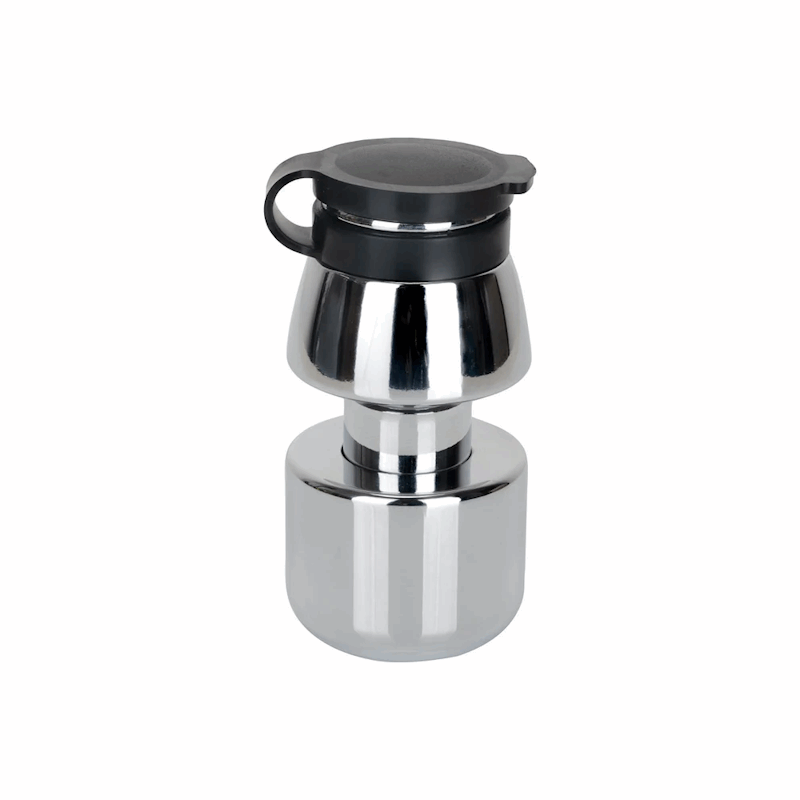
Padlock - A portable lock with a U-shaped shackle that passes through a chain, hasp or anchor point and locks into the lock body.
Picking - Opening a lock without the correct key by manipulating its internal components, usually with specialist tools. Pick-resistant locks use design features that make this harder.
Pin Tumbler - The most common type of key lock mechanism, where spring-loaded pins of varying lengths must be lifted to the correct height by the key to allow the cylinder to turn.
Resin Anchor (Chemical Anchor) - An anchor bolt that is bonded into a drilled hole using a resin, either from a capsule or an injection cartridge. The resin fills the hole and cures to form a very strong fixing, which can suit situations where expanding bolts are unsuitable.
Security Chain - A chain made from hardened alloy steel designed to resist cutting, sawing and leverage attacks, as opposed to an ordinary chain meant for lifting or general use.
Shackle - The U-shaped bar of a padlock that passes through a chain, hasp or anchor and locks into the body. The shackle is often the first target for attackers.
Shackle Diameter - The thickness of the steel bar that forms the shackle. A thicker shackle is generally harder to cut or lever.
Shear Bolt (Security Bolt) - A bolt whose head is designed to snap off when tightened to a set torque, leaving a smooth, rounded end that cannot be gripped or removed with a spanner.
Sold Secure - An independent UK testing and certification body that tests security products against attack. Products are rated Bronze, Silver, Gold or Diamond, with Diamond being the highest.
Staple - The fixed loop or U-shaped bracket onto which a hasp closes, and through which a padlock is fitted. See also Hasp and Staple.